What the texts say
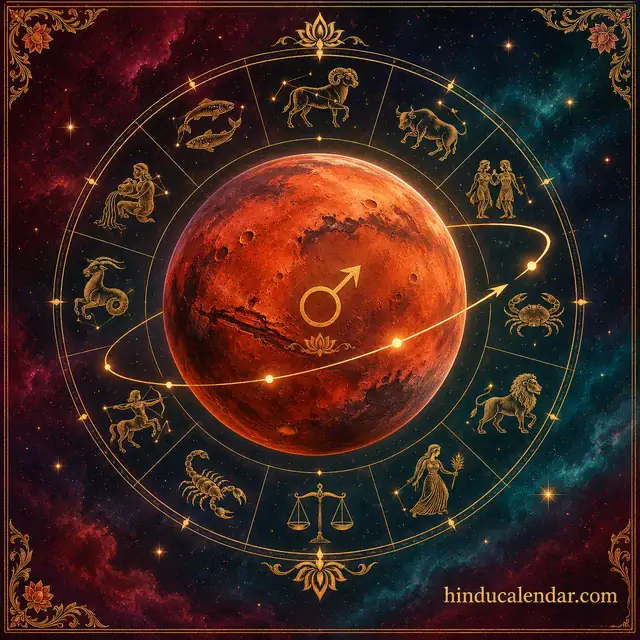
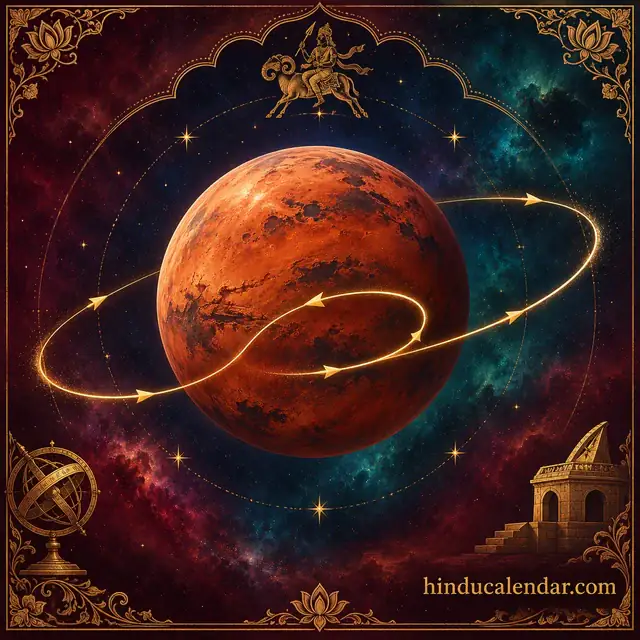
The classical texts treat a retrograde graha as having gained strength (cheshta bala), since it appears nearer to Earth and brighter. Some older verses add that a retrograde graha gives results like those of its exaltation. In practice, astrologers say that a retrograde Mars has the energy of Mars but turned inward or delayed: the drive is there, the outlet is not.
Effects in transit and in the chart
In transit, Mangala vakri is read as a period when plans that need force, speed or confrontation run into delays: building and property work, disputes, surgery and travel are said to need extra checking, and anger can be slow to rise but longer to settle. In the birth chart, a retrograde Mars is said to give a more restrained, strategic or suppressed expression of anger and courage, and any Mangal Dosha is read with this in mind.
What people do
The usual advice is to finish what was begun and to avoid starting new, high-stakes ventures, major purchases of land or vehicles, or surgery that can wait. People worship Hanuman and Murugan on Tuesday, recite the Hanuman Chalisa, and take care to channel the energy into exercise or hard work, rather than arguments.
Retrograde in the birth chart
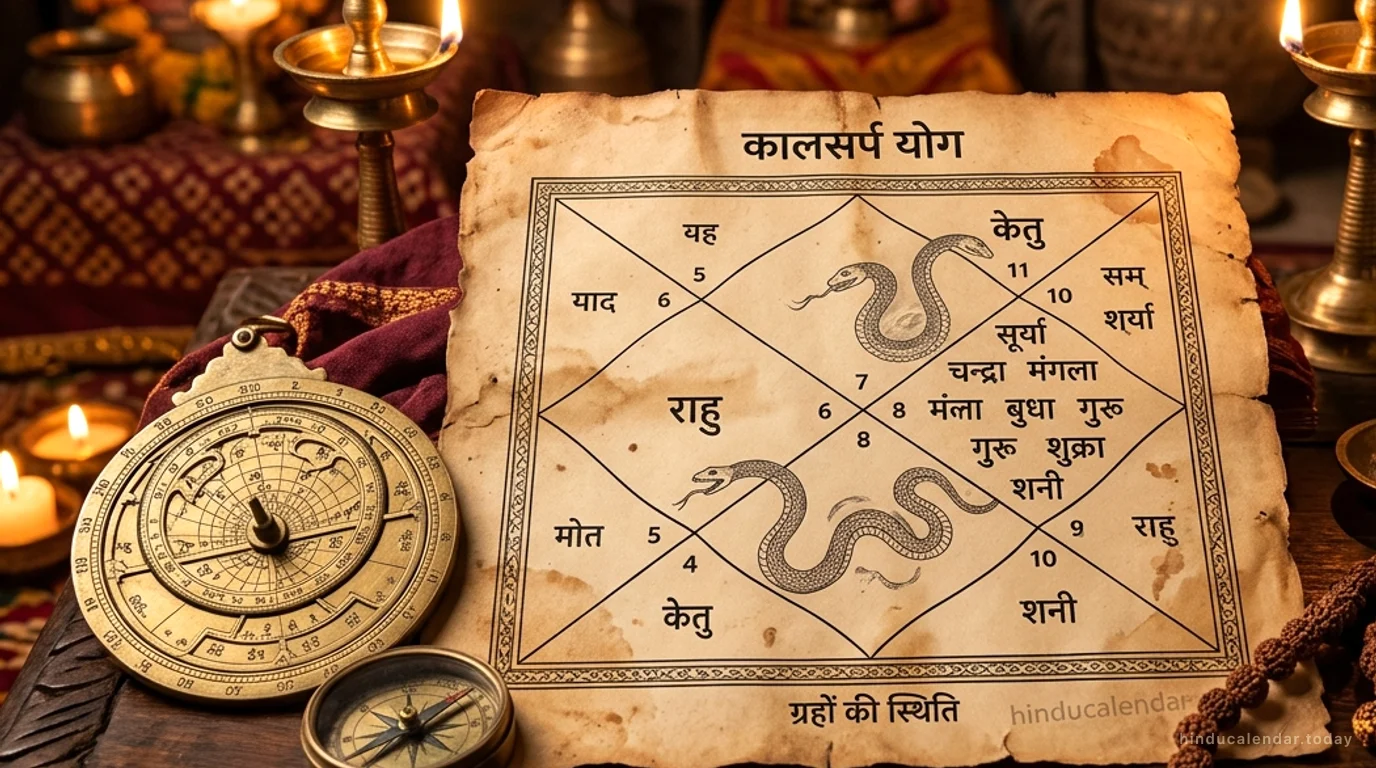
A graha that is retrograde at birth is marked in the kundali with an "R" or "Vakri". The classical view is that such a graha is strong but works in an unusual way: its results come late, or inwardly, or after a second attempt. Astrologers also read the pair of stationary points, when the graha stops before turning backward and when it stops again before moving forward, as the moments of greatest force.
The retrograde periods of the grahas, with their dates and the sign in which each begins and ends, are on the planetary pages of this site, and the Kundali page shows which grahas were retrograde in a birth chart.