What the transit means
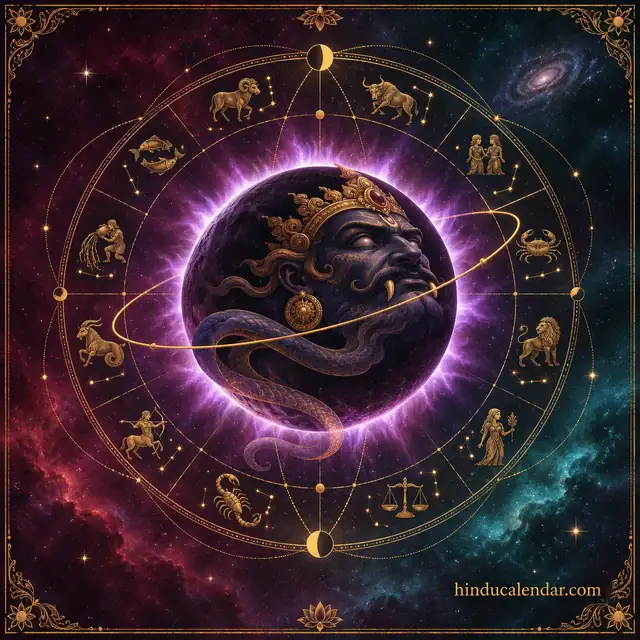
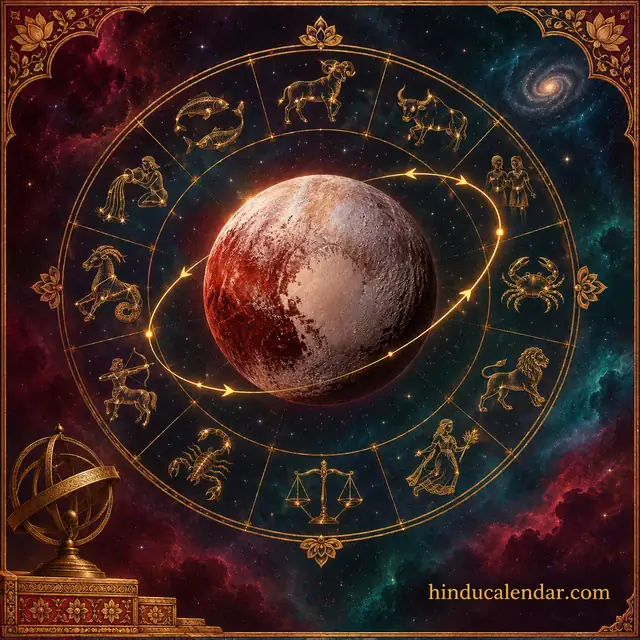
Yama's orbit is so elongated that it stays between about twelve and thirty years in a sign and takes about 248 years to go round. The transit is a deep, generational change, rather than a personal event, though it affects individual charts when it is on the ascendant, the Moon or the Sun. Astrologers who follow it expect a time of upheaval followed by renewal, struggles over power and resources, and the surfacing of what was hidden.
How it is read
There are no classical gochara tables for Yama. In practice, astrologers look at the natal house it crosses, the area of life that is being taken apart and rebuilt, and at its contact with the natal Sun, Moon, ascendant and the Rahu-Ketu axis. Its slowness means it works as a background tone over decades, and it is almost never used for short-term prediction.
How gochara is read
In Vedic astrology the transit is judged from the sign of the natal Moon, the Janma Rashi, which you can find with the Moon Sign Calculator: the sign the graha is in now is counted as the first, second, third and so on house from it. The Moon is chosen since it is the mind, and the transit is said to show how things are felt and met. Some astrologers also count from the ascendant.
A transit is only one layer. The classical texts add the rule of vedha, by which a graha in a house that gives good results can be blocked by another graha in a particular house, and the modern Ashtakavarga method weights each transit by the points the sign has in the birth chart. The period (dasha) running at the time, and the strength of the graha in the birth chart, decide how much of the result shows.
Worship and remedies
None is given in the texts. Since the god Yama rules dharma and the passage between lives, traditional practice suggests the observances for the ancestors and for Shiva as Mahakala: the Mahamrityunjaya mantra, charity in the name of the departed, and honest conduct. It remains a modern, speculative addition to Jyotisha, and is best treated as an interpretive tool, not a prediction of events.