What the transit means
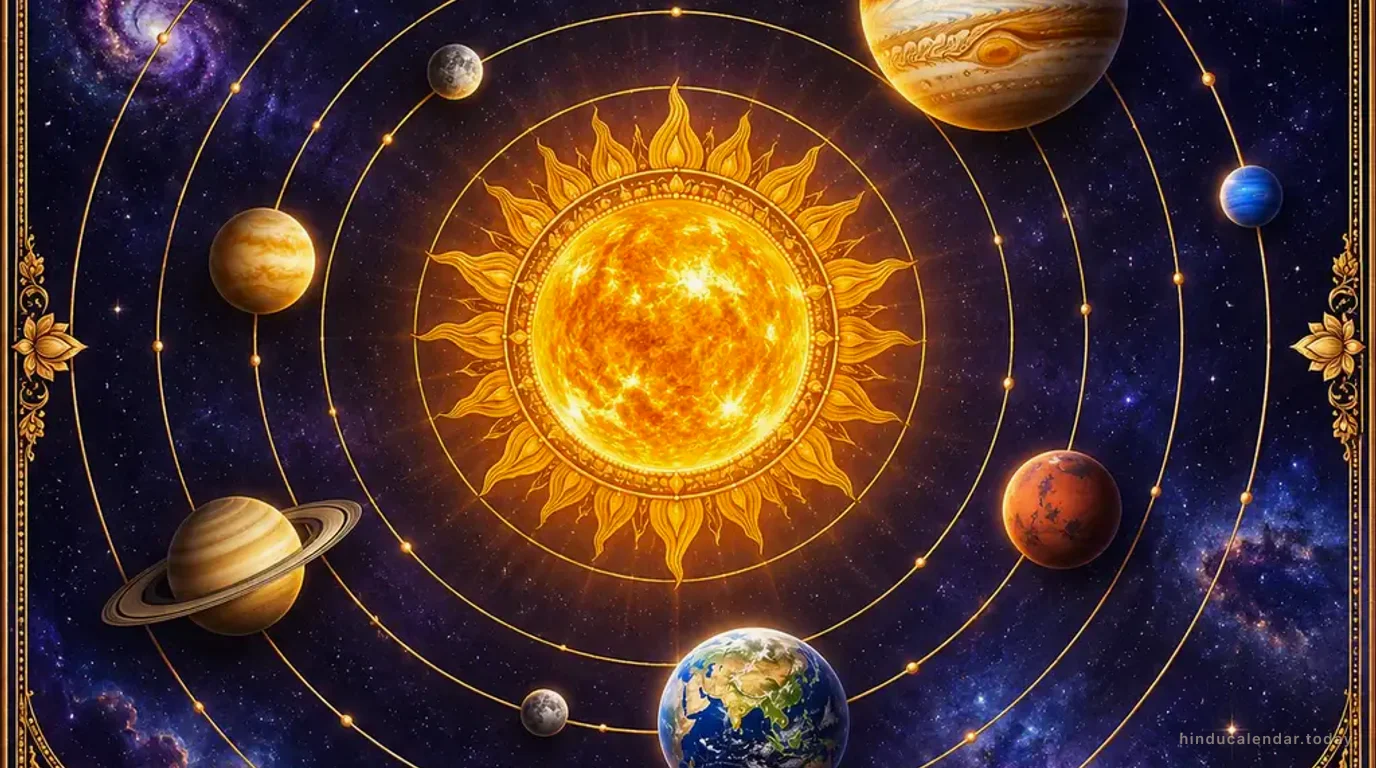
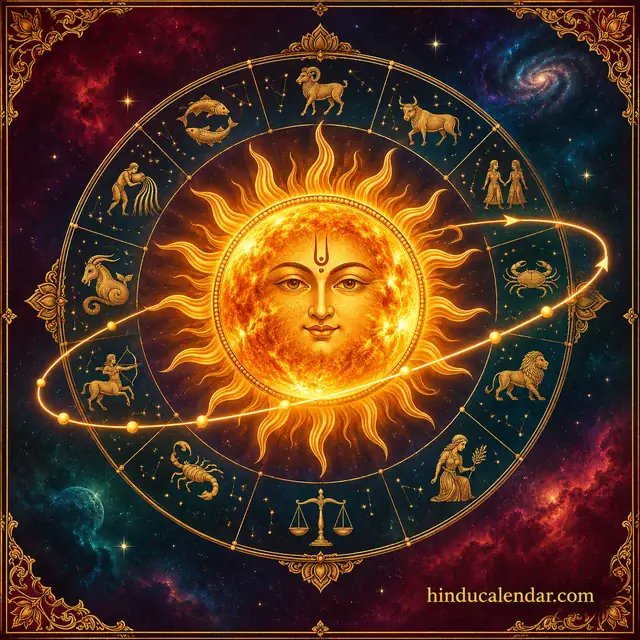
As the Sun passes through the twelve signs, the areas of life he lights up change from month to month. Astrologers read it as a sign of vitality, confidence and recognition when he stands well, and of ego clashes, heat, fatigue or trouble with superiors, officials and the father when he stands badly. The effect is mild and short-lived, a monthly colour to the days rather than a turning point, so the Sun's gochara is usually read together with the slower grahas.
Favourable and unfavourable houses
Counted from the sign of the natal Moon, the Sun's transit is favourable in the third, sixth, tenth and eleventh houses: courage and success over rivals in the third and sixth, standing and achievement in the tenth, gain in the eleventh. In the other houses the classical texts expect obstacles, with the first, second, fourth, eighth and twelfth the more troublesome, for example illness or expense in the twelfth and tension at home in the fourth.
How gochara is read
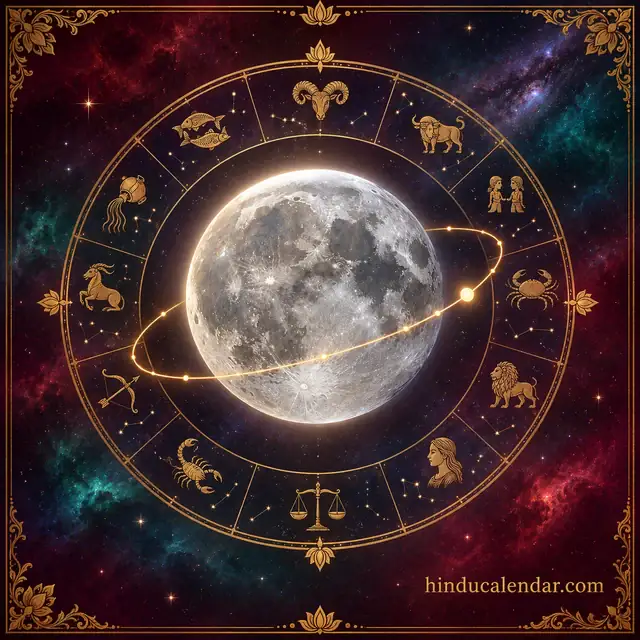
In Vedic astrology the transit is judged from the sign of the natal Moon, the Janma Rashi, which you can find with the Moon Sign Calculator: the sign the graha is in now is counted as the first, second, third and so on house from it. The Moon is chosen since it is the mind, and the transit is said to show how things are felt and met. Some astrologers also count from the ascendant.
A transit is only one layer. The classical texts add the rule of vedha, by which a graha in a house that gives good results can be blocked by another graha in a particular house, and the modern Ashtakavarga method weights each transit by the points the sign has in the birth chart. The period (dasha) running at the time, and the strength of the graha in the birth chart, decide how much of the result shows.
Worship and remedies
The remedies are simple and daily: offering water to the rising Sun (Surya Arghya), reciting the Aditya Hridayam or the Surya mantras, and a fast on Sunday. Ravivara fasts are described on the Surya Ravivara Vrat Katha page. Wearing ruby, the Sun's gem, is common but is best done on an astrologer's advice after the whole chart is read.