
Narasimha Jayanti
Auspicious celebration and sacred observance of narasimha-jayanti bringing families and communities together in devotion.
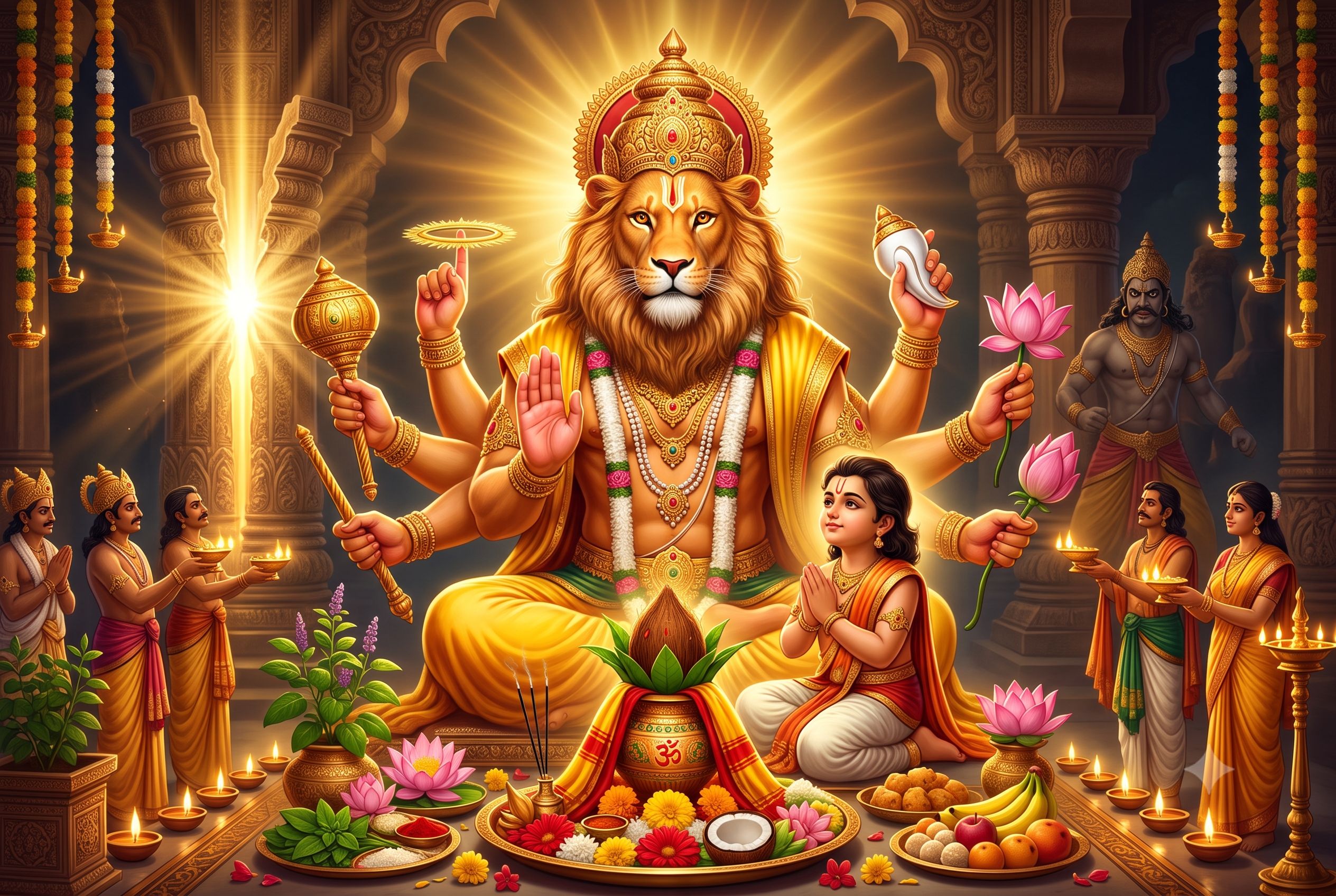
Auspicious Muhurat & Puja Timings
India•19 May 2027
Auspicious twilight window coinciding with the divine appearance of Lord Narasimha.
Key Observance Timings
Sunset twilight window when Lord Narasimha incarnated to protect Prahlada
Auspicious fast breaking window next morning after sunrise
Significance & Spiritual Meaning
Spiritual philosophy, inner meaning and eternal virtues
narasimha-jayanti is celebrated with deep cultural warmth, traditional prayers, and joyous festivities according to ancient calendar traditions. Across homes and vibrant community centers, people prepare for the occasion by adorning their shrines, cooking special delicacies, and welcoming friends and family. Festivals in Indian culture serve as vibrant threads weaving together art, music, delicious cuisine, and deep spiritual introspection. On this special day, families gather to offer fresh flowers, light lamps, and share consecrated sweets, reinforcing bonds of love and social cohesion.
Every traditional festival carries a profound timeless message—reminding us of the interconnectedness of all life, the cycles of nature, and the ultimate triumph of goodness, gratitude, and moral integrity. Participating in narasimha-jayanti rejuvenates the spirit, alleviates daily stresses, and passes down cherished cultural values and sacred wisdom to future generations.
Sacred Story & Divine Lore
Scriptural history and divine legends in sacred lore
"In the Padma Purana, Lord Krishna tells King Yudhishthira that a radiant divine feminine power manifested from Lord Vishnu's body to vanquish the demon Mura. Pleased by her devotion, Vishnu named her Ekadashi and proclaimed that whoever observes this sacred vow with devotion will receive freedom from all sins and enter Vaikuntha."
Key Rituals & Observance
Step-by-step sacred rituals and worship practices
Early morning purification bath and wearing clean, festive traditional attire.
Illuminating the home shrine with ghee lamps and offering fresh fragrant flowers.
Performing traditional prayers and chanting uplifting hymns and stotras.
Preparing and sharing delicious festive meals and consecrated prasad with neighbors and the needy.
Expressing gratitude for health, family unity, and prosperity.
Sacred Deity & Powerful Mantras
Lord Sri Hari Vishnu (Bhagavan Narayana) • Vedic and Puranic chants for peace and blessings
Vasudeva Dwadasakshara Mantra
ॐ नमो भगवते वासुदेवाय ॥
Om Namo Bhagavate Vasudevaya
Narayana Ashtakshara Mantra
ॐ नमो नारायणाय ॥
Om Namo Narayanaya
Traditional Bhog & Sacred Offerings
Sacred food offerings prepared with devotion