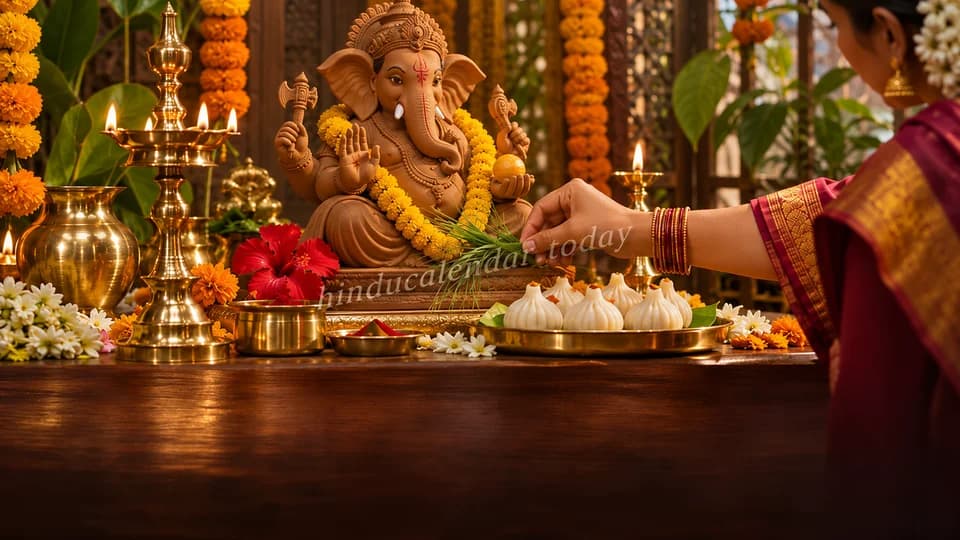
The legend of Vighnaraja
The Mudgala Purana says that once Parvati laughed, and from her laughter a being was born who called himself Mamasura, from mama, "mine". He went to the forest to do penance, and Shambara, a demon, taught him the arts of the asuras. Shukracharya gave him the Ganesha mantra, and by worshipping Ganesha he won the boon of rule over the universe and freedom from fear. Swollen with pride, he made war on the gods and imprisoned them.
The gods prayed to Ganesha, who came as Vighnaraja, riding the great serpent Shesha. He sent Narada to tell Mamasura to stop. Mamasura refused, and Vighnaraja threw his lotus at the demon's army; its fragrance made the soldiers faint. Mamasura, seeing the power of the god whose boon he had misused, surrendered. He was spared, and the gods were set free.
Mamasura is the sense of ownership that turns gifts into possessions. Vighnaraja removes it, and with it the deepest obstacle, the ego.
The lord of obstacles
Ganesha is worshipped first at every rite as Vighneshvara or Vighnaraja, the one who removes obstacles from the path of the good and places them before those who act wrongly. Vighneshwar of Ozar, one of the eight Ashtavinayaka temples, is the same form.
Keeping the fast
The fast is kept from sunrise to moonrise. In the evening Ganesha is worshipped with durva grass, red flowers, modak or laddoo of sesame and jaggery, and the katha of the month is read. When the Moon rises it is offered water (arghya) with sandal, rice and flowers, and only then is the fast broken.