The legend of Gajanana
Kubera, the lord of wealth, once went to Kailasa and saw the beauty of Parvati. A moment of greed for what he could not have rose in him, and from that moment a demon was born: Lobhasura, greed itself. The demon learned the five-syllable mantra of Shiva from Shukracharya and, by penance, won the boon that he would have no fear. With it he took the earth, heaven and even Kailasa, and Shiva left his mountain to him.
The sage Raibhya advised the gods to worship Ganesha. Gajanana appeared and sent Shiva himself to Lobhasura with a message: give up what you have taken, or face Gajanana. Shukracharya, who knew who Gajanana was, told the demon that no boon could protect him. Lobhasura understood, came to Gajanana and surrendered, and was allowed to live in the underworld.
The story is told to show that greed is not killed but subdued. Gajanana's elephant head is read as the wisdom that sees through desire, and his large ears as patience to listen.
The elephant head
Ganesha received his elephant head when Shiva, not knowing the boy guarding Parvati's door was her son, cut off his head; to make amends, Shiva gave him the head of the first creature found, an elephant, and brought him back to life.
Keeping the fast
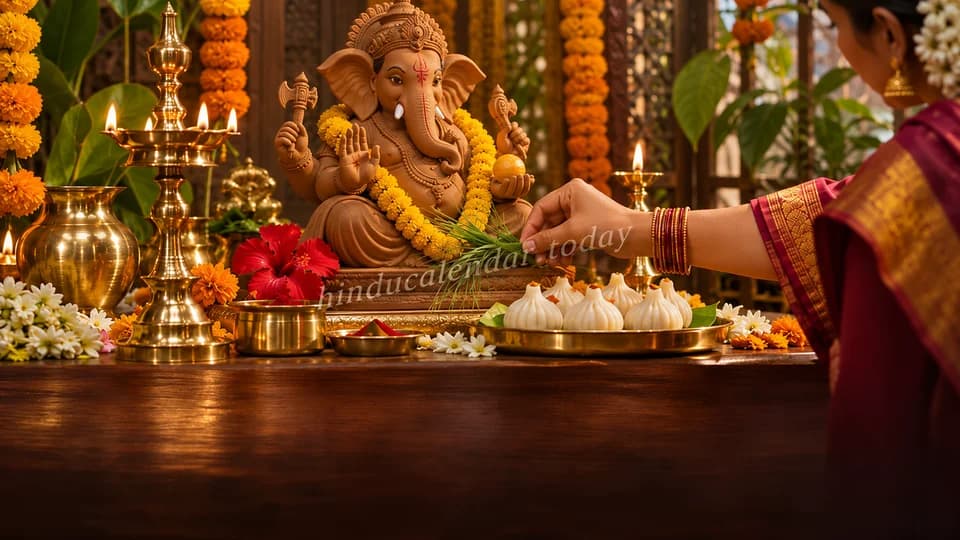
The fast is kept from sunrise to moonrise. In the evening Ganesha is worshipped with durva grass, red flowers, modak or laddoo of sesame and jaggery, and the katha of the month is read. When the Moon rises it is offered water (arghya) with sandal, rice and flowers, and only then is the fast broken.