The katha
When the gods and the asuras agreed to churn the ocean of milk for the nectar of immortality, they made Mount Mandara the churning rod and the serpent Vasuki the rope, and began at once. They forgot to worship Ganesha first. The mountain, with no support beneath it, began to sink into the ocean, and the churning stopped. Then the first thing to rise from the waters was the deadly poison halahala, which Shiva had to drink to save the world.
The gods asked what they had done wrong, and were told that they had begun a great work without first worshipping the remover of obstacles. They made an image of Ganesha, some say from the white foam of the ocean itself, and worshipped him with devotion. After that the work went forward: Vishnu became the tortoise Kurma to hold the mountain on his back, and in time the nectar rose.
A white image of Ganesha said to be made of sea foam is worshipped at Thiruvalanchuzhi near Kumbakonam, where the Shiva of the temple is called Kapardishvara.
Kapardisha
Kaparda is the coil of matted hair of an ascetic, and Kapardi is one of the oldest names of Rudra in the Vedas. Ganesha bears it as the son who shares his father's nature: an ascetic's calm in the midst of the world.
Keeping the fast
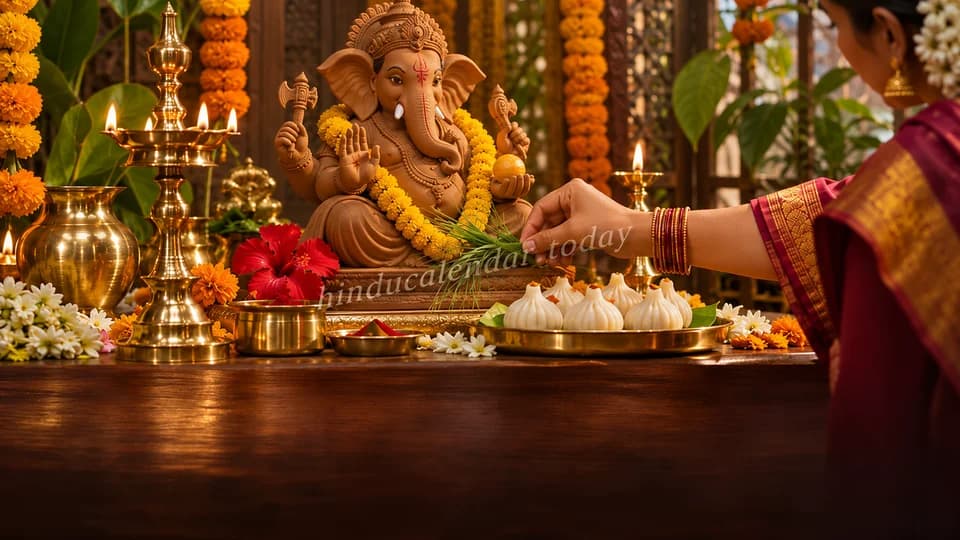
Vinayaka Chaturthi is kept on the fourth day of the waxing Moon. Ganesha is worshipped at midday, the hour of his birth, with 21 blades of durva grass, red flowers, sandal and 21 modaks or laddoos, and the katha is read. Some fast until evening, some take one meal. The Moon is not looked at on this night.