
Winter Solstice 2026
The exact moment the Sun reaches 270° tropical longitude (Sayana Makara), marking the shortest day and longest night of the year in the Northern Hemisphere.
December 22, 2026
December 2026 Schedule & Muhurat
Place: India
Winter Solstice 2026 Exact Moment & Daylight
Exact astronomical timings calculated for Tuesday, December 22, 2026
The Sun reaches maximum southern declination (-23° 26' 16"), perpendicular to the Tropic of Capricorn.
3-Day Daylight Comparison (Minimum Daylight)
Earth is near perihelion (~0.983 AU) while Northern Hemisphere tilts 23.44° away.
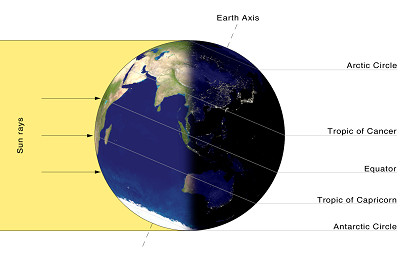
Earth's Axial Tilt at Solstice
Sun rays directly over the Tropic of Capricorn (23.44° S)
Astronomical & Vedic Overview
Astronomical Mechanics & Vedic Significance
The Winter Solstice (Uttarayana Arambha) is the precise celestial moment when the Sun reaches its maximum southern declination (-23° 26'). It marks the transition from Hemanta Ritu (Pre-Winter) to Shishira Ritu (Winter), beginning the Sun's auspicious six-month northward celestial journey.
Sayana Solstice (December 21–22): Governs physical seasons (Ritus) and daylight minimum when the Sun enters 270° tropical longitude.
Nirayana Makara Sankranti (January 14–15): Accounts for the precession of equinoxes (Ayanamsha ~24°), marking the Sun's entry into the sidereal constellation of Capricorn ~23 days later.
Frequently Asked Questions
Times are worked out for the place you have chosen (India until you choose one). For the whole day at your place, open the daily panchang.