
Summer Solstice 2026
Exact astronomical solstice moment, longest day duration, local sunrise & sunset timings, and solar coordinates.
June 21, 2026
June 2026 Schedule & Muhurat
Place: India
Summer Solstice Moment & Daylight (2026)
Exact astronomical timings on Sunday, June 21, 2026
The precise celestial instant when the Sun reaches its maximum northern declination (+23° 26' 17") directly over the Tropic of Cancer, marking the longest day and onset of Dakshinayana.
Daylight Duration Progression (Longest Day Peak)
Sun stands directly overhead Tropic of Cancer (23.44° N) at aphelion.
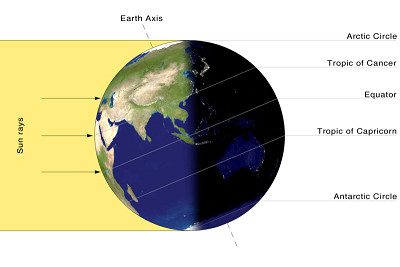
Earth's Axial Tilt at Solstice
Sun rays directly over the Tropic of Cancer (23.44° N)
Astronomical & Vedic Overview
Astronomical Mechanics & Vedic Significance
The Summer Solstice (Dakshinayana Arambha) is the precise celestial moment when the Sun reaches its maximum northern declination (+23° 26'). It marks the transition from Grishma Ritu (Summer) to Varsha Ritu (Monsoon), ushering in the life-giving rains.
Sayana Solstice (June 20–22): Governs the physical seasons (Ritus) and daylight peak when the Sun enters 90° longitude.
Nirayana Sankranti (July 16): Accounts for the precession of equinoxes (Ayanamsha ~24°), marking the Sun's entry into the sidereal constellation of Cancer.
Frequently Asked Questions
Times are worked out for the place you have chosen (India until you choose one). For the whole day at your place, open the daily panchang.