The katha
King Dasharatha of Ayodhya ruled justly, but in old age he had no son to follow him. On the advice of his ministers and his guru Vasishtha he invited the sage Rishyashringa to perform the Putrakameshti, the sacrifice for sons. As the offerings were made, a shining figure rose from the fire holding a golden bowl of payasam, rice cooked in milk, and told the king that his queens should eat it.
At the same time the gods had gone to Vishnu, troubled by Ravana, king of Lanka, who had won the boon that no god, demon or spirit could kill him; in his pride he had not asked for protection from men. Vishnu promised to be born as a man, the son of Dasharatha, to destroy him.
Dasharatha gave half the payasam to Kausalya, half of the rest to Sumitra, and the remainder to Kaikeyi, and Sumitra received a second share. In time Kausalya gave birth to Rama on the Navami of Chaitra at noon, when five planets stood exalted; Kaikeyi to Bharata; and Sumitra to the twins Lakshmana and Shatrughna. Ayodhya rejoiced for days.
Rama grew up to be the ideal son, brother, husband and king, Maryada Purushottama, and the story of his life is the Ramayana. Hearing it on his birthday is said to bring the merit of the whole epic.
Keeping the fast
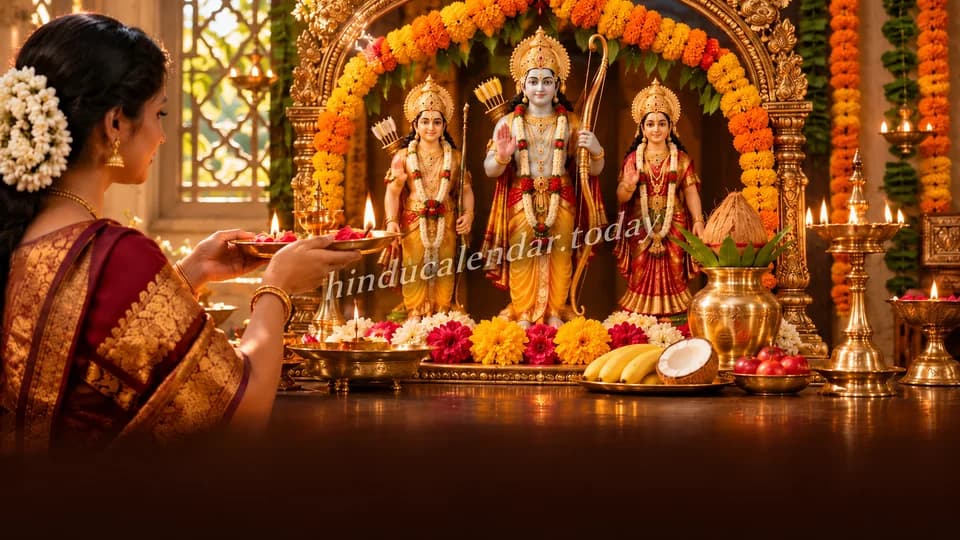
The day is kept with a fast until the hour of the birth, or until evening. The image is bathed, dressed and worshipped with flowers, sandal, incense, a lamp and the offerings dear to the deity, the katha is read and the aarti sung, and the fast is broken with the prasad.
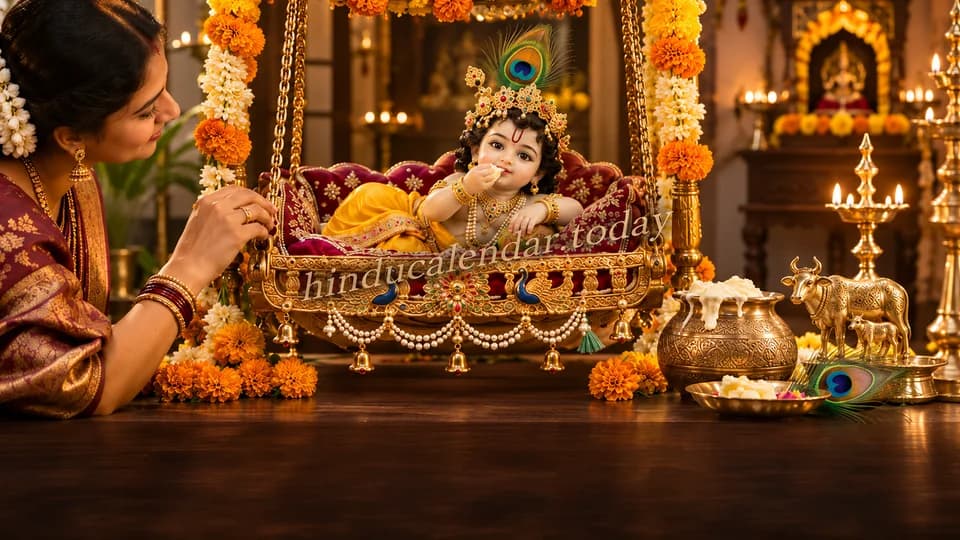
At noon the image of the infant Rama is placed in a cradle and rocked, and the Ramayana or Ramcharitmanas is read through the day.