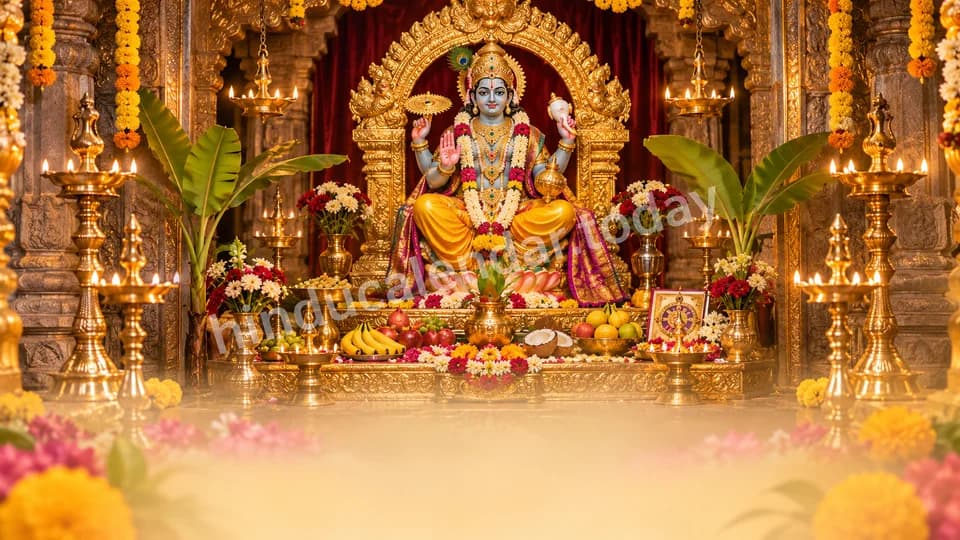
The katha
In the city of Kampilya lived a Brahmin named Sumedha and his wife Pavitra, both pious, but so poor that they often went hungry themselves rather than turn away a guest. At last Sumedha decided to go abroad to earn money, but Pavitra told him that wealth comes only by fate and merit, not by wandering, and he stayed.
One day the sage Kaundinya came to their door. They welcomed him and gave him what they had. Pavitra asked him how they could be freed from their poverty. The sage told them of the Parama Ekadashi of the dark half of the leap month, and of a five-day fast that could be kept from that Ekadashi to the full Moon, the Panchratri vrat.
The couple kept it as Kaundinya taught. Soon after, a prince came riding by, saw their devotion and gave them a fine house, land and cattle. They lived in comfort, still generous to all, and at the end of their lives went to Vishnu's heaven.
Krishna tells Yudhishthira that Kubera himself received his wealth by keeping this Ekadashi, and that Harishchandra regained his kingdom by it.
Keeping the fast
The vrat begins with a single meal on the Dashami. On the Ekadashi no grain or beans are eaten; Vishnu is worshipped with tulasi, yellow flowers, incense and a lamp, the katha is heard and the night is spent in his remembrance. The fast is broken (parana) on the Dwadashi, after sunrise and within the time given for it.