The seven grains
The lists vary slightly between texts and regions. A widely used one is: barley (yava, jau), wheat (godhuma, gehu), rice (dhanya, chawal), sesame (tila), foxtail millet (kangu, kangni), green gram (mudga, moong) and Bengal gram (chanaka, chana). Some replace one of these with black gram (urad) or red lentils (masoor). Barley is the most important: it is the grain of the oldest Vedic offerings.
How they are used in Navratri
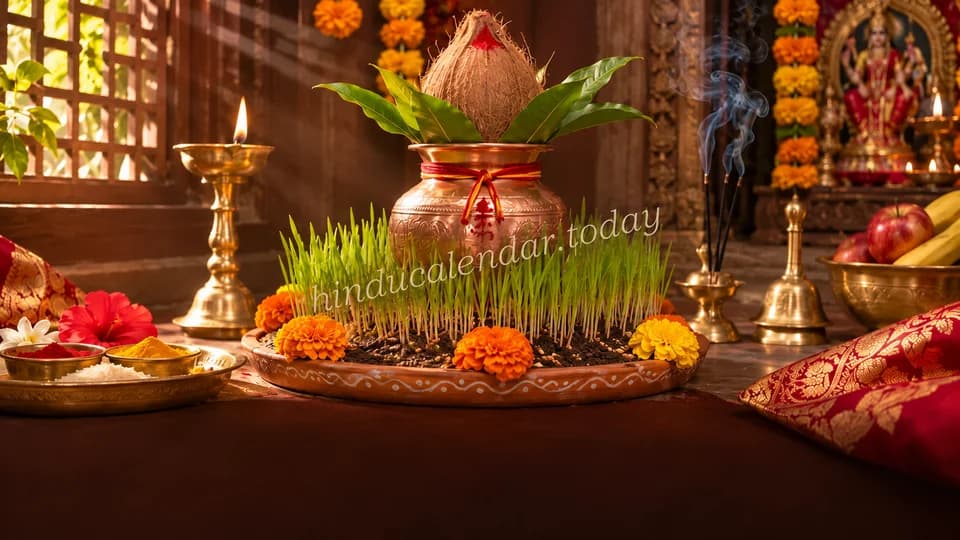
On the first day of Navratri a wide clay bowl is filled with soil and the seven grains, or barley alone, are sown in it, and the kalash is set in the middle. The seeds are watered every day, and by the ninth day they have grown into green shoots (jowara or jayanti). Their height and colour are read as a sign of the year's harvest and the family's fortune. At the end of the festival the shoots are worshipped, worn in the hair or turban, given to relatives and immersed in water.
Other uses
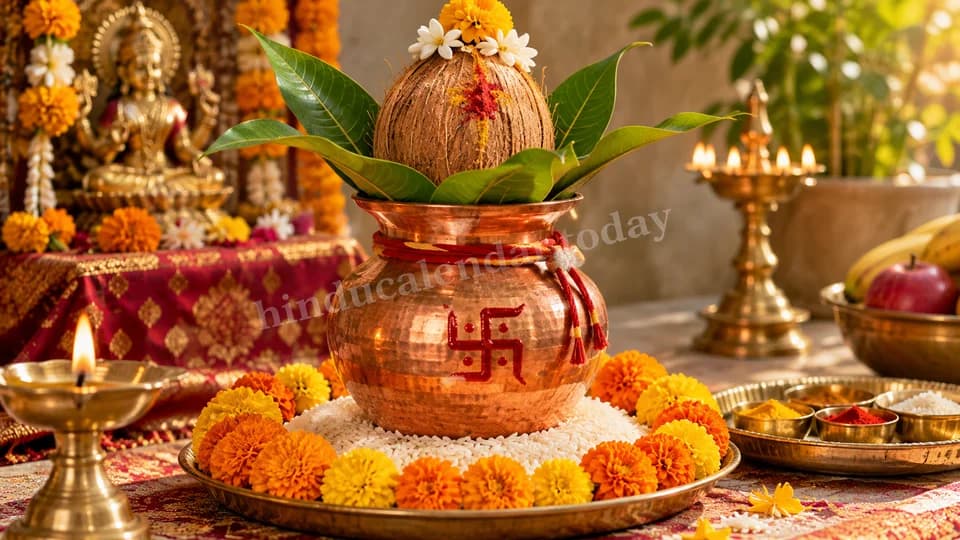
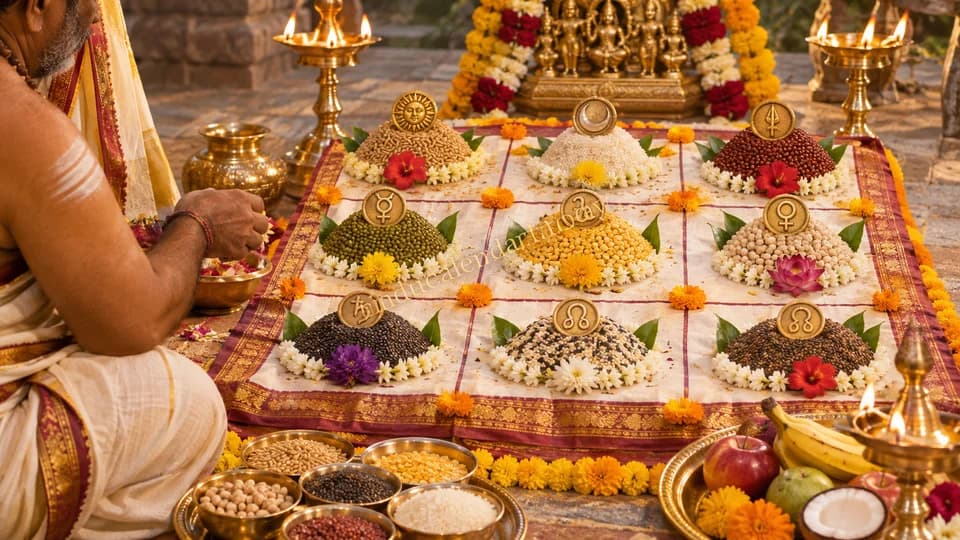
In a puja, a heap of the seven grains is the seat for the kalash and for the Navagraha. In charity, the seven grains are given to ease the troubles of the grahas, each grain being linked with a graha. In some regions a little of each is placed with the bride's things at a wedding as a blessing of plenty.