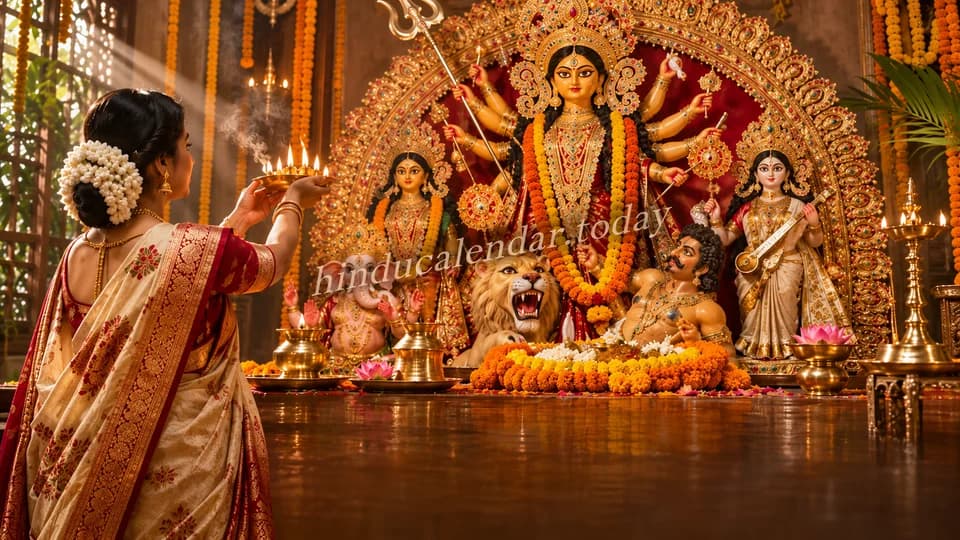
The dhunuchi
A dhunuchi is a clay vessel shaped like a goblet, with a wide bowl on a stem. Dried coconut husk is packed into it and lit, and dhuna, a fragrant resin, and camphor are sprinkled on the embers, sending up thick white scented smoke. Offering incense (dhupa) is one of the sixteen offerings of every puja; in the dhunuchi it becomes a dance.
The dance
As the priest performs the evening aarti, the dhakis beat their drums, and men and women step forward holding a dhunuchi in each hand, sometimes a third between their teeth. They sway, spin and move to the rising rhythm of the drums, waving the censers in circles before the goddess. Skilled dancers balance burning dhunuchis on their heads. Pandals hold dhunuchi competitions, and the dance often continues long after the aarti ends.
Its meaning
The dance is said to recall the energy and joy with which the goddess fought Mahishasura, and to be the devotee's own fierce, joyful offering to her. The smoke is believed to purify the air and the minds of those present. It is danced most of all on the Navami night, the last before the goddess leaves.
At home
In Bengali homes the dhunuchi is also offered during the family's own aarti, without the dance, and its smoke is wafted through the rooms to purify them.