The legend
The best-known story tells that after defeating Ravana, Rama wished to worship Shiva to be free of the sin of killing a Brahmin, since Ravana was a learned Brahmin. He sent Hanuman to Kailash to bring a lingam. When Hanuman was delayed, Sita shaped a lingam from sand so that the worship could take place at the right time. This is the Ramalingam, the main lingam of the temple.
When Hanuman returned with his lingam, Rama placed it beside the first and ordered that it be worshipped first. It is called the Vishwalingam or Hanumalingam. Another account says Rama worshipped Shiva here before crossing to Lanka.
The temple and its worship
The temple has some of the longest pillared corridors of any Hindu temple. Pilgrims bathe in the sea at Agni Tirtham and then in the 22 wells inside the temple, each with its own sacred water, before worshipping the lingam.
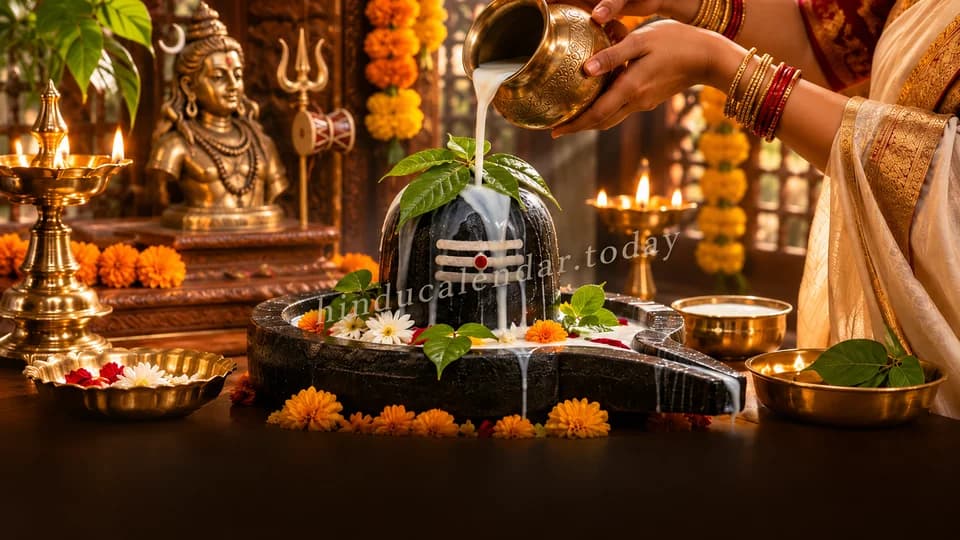
Rameshwaram is one of the Char Dham of India, with Badrinath, Puri and Dwarka. Pilgrims traditionally bring Ganga water to pour on the lingam and take sand from Rameshwaram to the Ganga, joining north and south.
Among the twelve Jyotirlingas
Rameshwaram is the seventh of the twelve Jyotirlingas in the order of the Dwadasha Jyotirlinga Stotram, the short hymn that names all twelve. A jyotirlinga is a lingam of light, a place where Shiva is believed to have appeared as an endless pillar of fire. The hymn promises that whoever recites the twelve names morning and evening is freed from the sins of seven lives, and many devotees hope to visit all twelve in their lifetime.