Who is Shani
Shani is the son of Surya and Chhaya, the shadow of Surya's wife Sanjna. It is said that his gaze fell on his father as soon as he was born and darkened him, and that father and son have been at odds ever since. He moves slowest of the visible grahas, taking about two and a half years to cross a sign and nearly thirty to circle the zodiac, hence his name Shanaishchara, the slow-going.
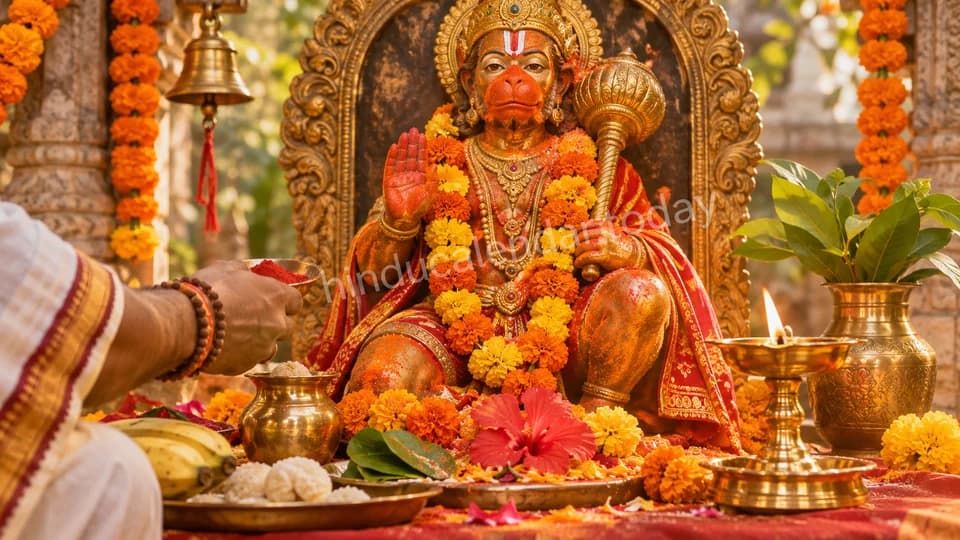
He is a devotee of Shiva, who made him the judge of deeds among the grahas. A well-known story says Hanuman freed Shani from Ravana's prison, and Shani promised not to trouble those who worship Hanuman.
His form
Shani is shown dark, dressed in black or blue, holding a bow, arrows and a trident, riding a crow or a vulture. The temple of Shani Shingnapur in Maharashtra, where houses famously have no doors, and Thirunallar in Tamil Nadu are among his best-known shrines.
Shani in Jyotisha
Shani teaches through delay and difficulty, but what he grants lasts. His Sade Sati, the seven and a half years when he passes over the signs before, of and after the natal Moon, and his dhaiya of two and a half years, are read as times of testing.
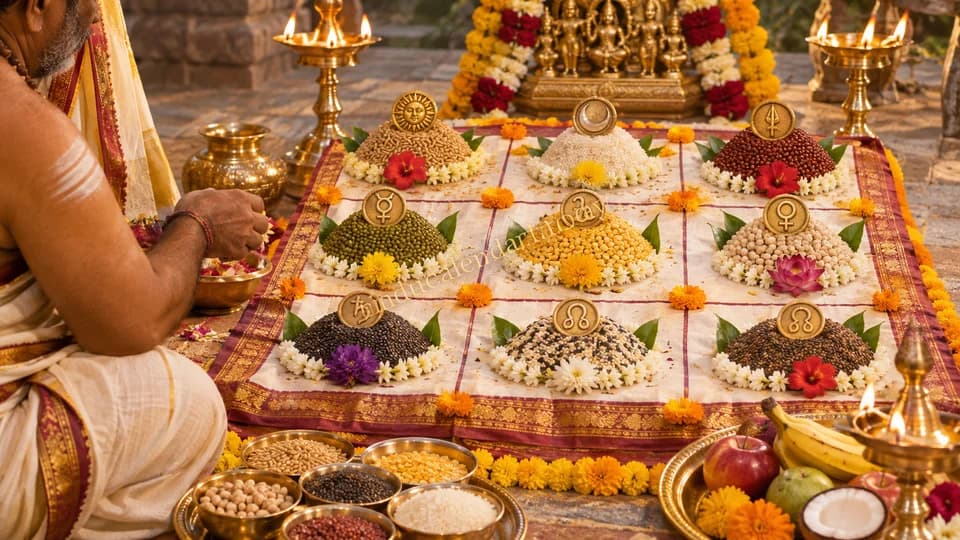
He is pacified on Saturdays by offering mustard oil and black sesame, lighting oil lamps under a peepal tree, giving to the poor and to labourers, and reciting the Hanuman Chalisa. Shani Jayanti falls on the Amavasya of Jyeshtha.