Who is Brihaspati
Brihaspati is the son of the sage Angiras and the guru of the devas, as Shukra is of the asuras. In the Rigveda he is the lord of prayer and sacred speech, and he guides the gods with counsel and ritual in their struggles. A school of thought named after him, the Barhaspatya, and the sixty-year cycle of years (samvatsaras) are linked to his slow course through the zodiac.
His form
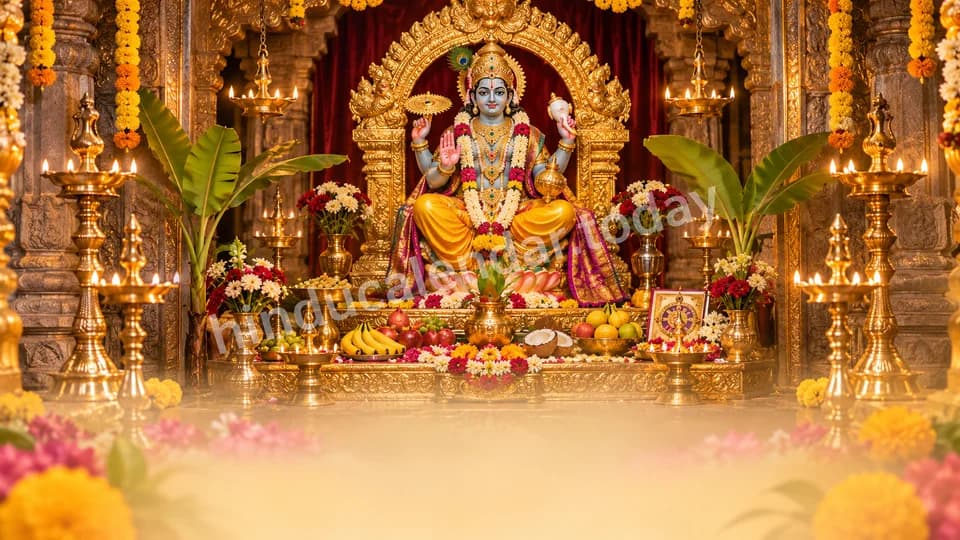
Guru is shown golden-yellow and dignified, holding a rosary, a staff and a water pot, with one hand raised in blessing. His shrine among the Navagraha temples is at Alangudi in Tamil Nadu.
Guru in Jyotisha
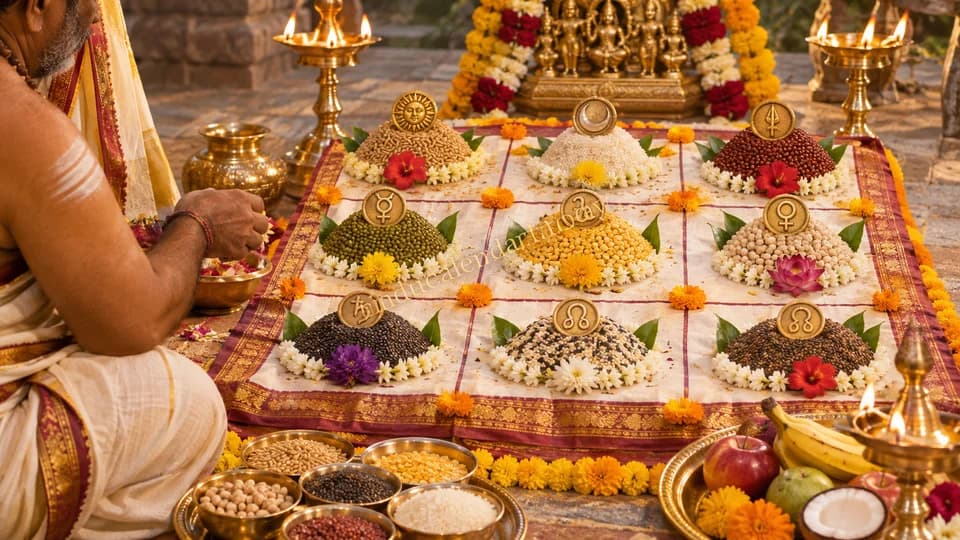
Guru is the most benefic of the grahas: where he looks he protects. His transit through a sign lasts about a year, and his aspect on the Moon or the ascendant is weighed for marriage and other great events. His festival Guru Purnima honours all teachers. He is worshipped on Thursdays with yellow flowers, yellow clothes, turmeric and chana dal, and through the worship of Vishnu.
Guru's period (dasha) lasts sixteen years. When he joins the Moon or stands in a kendra from it, the chart has Gajakesari yoga, one of the best known of all yogas. Every twelve years, when Guru enters certain signs, the Kumbh Mela is held at Haridwar, Prayagraj, Ujjain and Nashik, and the Pushkaram festivals of the southern rivers follow his yearly passage from sign to sign.