
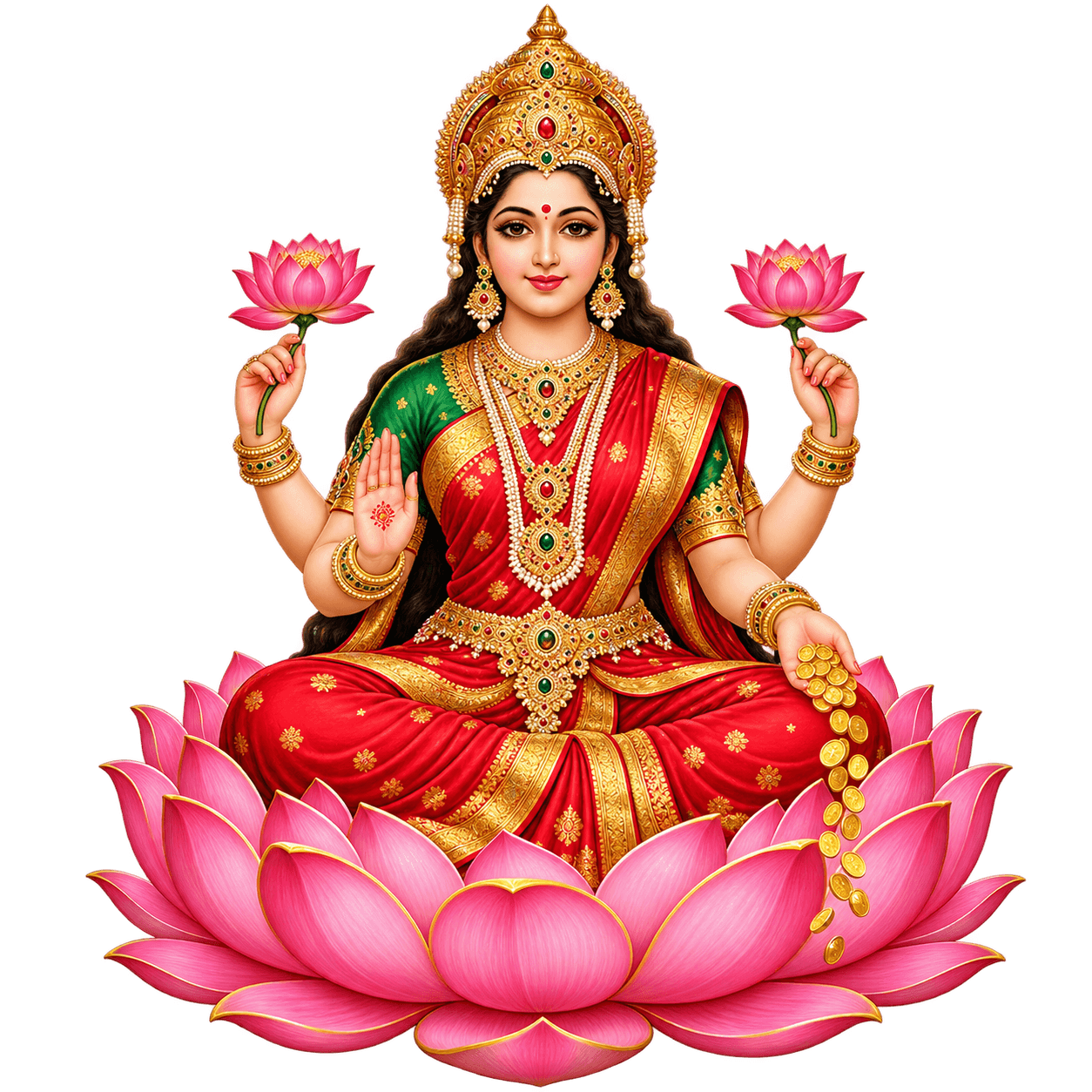
Meaning & context
Seeking Lakshmi’s blessings at Diwali
Prosperity supports everyday needs as well as devotional life. Puja, Hawan and other religious observances require offerings and material resources, including for sages and Pandits who sustain a daily practice.
Financial hardship can persist despite sincere effort. The wish for a more secure life leads some people to seek an astrological explanation for obstacles to earning and saving.
Within Jyotisha, devotional remedies are associated with overcoming life’s obstacles. Around Diwali, many households follow them to seek the blessings of Goddess Lakshmi. Some are familiar parts of worship during the five days of festivities. The benefits described here express traditional beliefs, rather than assured financial outcomes.
These observances are often called Diwali Totake or Diwali Totke. Although some people regard them as superstition and hesitate to discuss them, they remain part of the devotional customs of many families. Some use familiar household offerings; formal yantra installation calls for a learned Pandit.
Yantras have distinct ritual identities. Use the prescribed form and seek a learned Pandit’s guidance for formal installation, Prana-Pratishtha and detailed Puja.
Dhanteras
Draw Om at the entrance on Dhanteras
On Dhanteras, also called Dhantrayodashi, a customary observance is to draw ॐ (Om) at the main entrance using a freshly ground paste of turmeric and rice. It is traditionally associated with welcoming prosperity into the home.
Both ingredients are commonly found in the kitchen, making this one of the more accessible household observances.
After Diwali Puja
Sound the Shankh and Damaru after Puja
Another custom is to blow a Shankh, the ritual conch, and play a Damaru, a small drum, after Diwali Puja. In this tradition, their sound is associated with dispelling poverty and inviting prosperity.
A conch is already part of many household shrines. A Damaru may be less readily available, but can be obtained with the other Puja supplies when following this custom.
With a learned Pandit
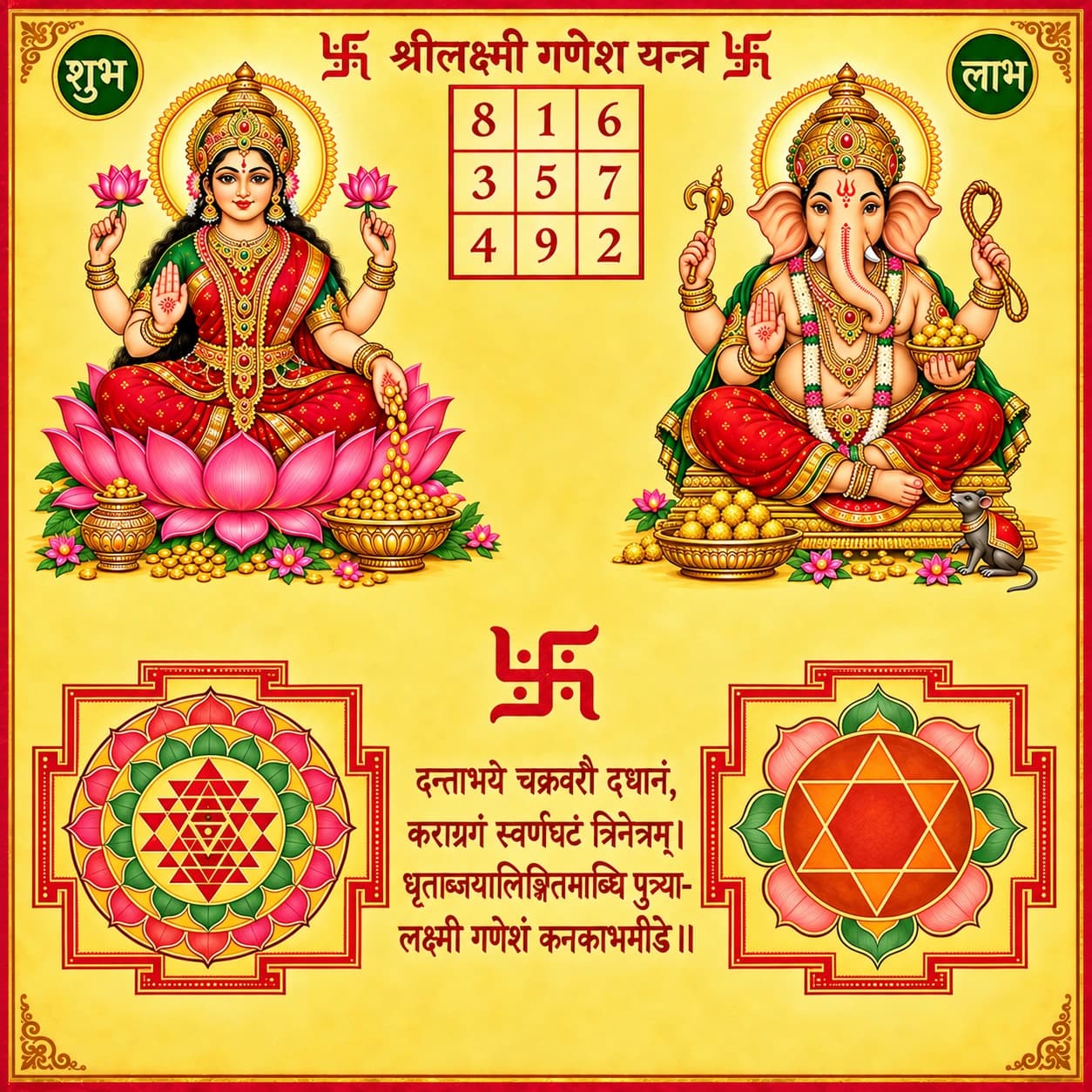
Install the Lakshmi-Ganesha Yantra
Shri Ganesha is associated with Riddhi and Siddhi, while Shri Lakshmi presides over wealth and prosperity. Lakshmi Yantra and Ganesha Yantra have distinct identities; their combined Lakshmi-Ganesha Yantra is also described as a Maha Yantra in this tradition.
Its installation on Deepavali, with the prescribed Vedic worship, is traditionally undertaken to seek lasting prosperity. This formal installation should be conducted by a learned Pandit.
A yantra’s material and exact form matter in ritual practice. Its lines, circles, corners and other elements should follow the prescribed design, rather than an improvised decorative pattern. Different deities have different yantras; the diagrams are not interchangeable.
Installation includes Prana-Pratishtha: invoking the deity and requesting the divine presence in the yantra. The prescribed Puja procedures are connected with its particular geometry, including the arrangement and number of its elements.
Diwali Puja day
Worship a sugarcane root with Lakshmi
In this observance, the root of a sugarcane plant is brought home in the morning on Diwali Puja day and worshipped alongside Goddess Lakshmi during the Puja. The practice expresses a prayer for abundance.
Mahalakshmi as Dhanyalakshmi is associated with agricultural nourishment, including grain and sugarcane. Sugarcane is regarded as sacred and appears in the hands of several Hindu deities.
Sugarcane with its roots intact may be available in farming areas and at festival markets, though it can be harder to find in large cities.
During Lakshmi Puja
Offer lotus flowers and use a lotus-seed mala
The lotus has a special place in Lakshmi worship. This custom combines offering lotus flowers during Lakshmi Puja with Lakshmi Japam, devotional repetition, using a mala made from Kamal-Gatte (कमल-गट्टे), or lotus seeds.
Where fresh lotus flowers cannot be obtained, the tradition describes 108 repetitions using a lotus-seed mala as equivalent in devotional merit to offering 108 lotus flowers. This is a traditional religious equivalence.
Lotus-seed malas are commonly sold among Puja supplies and offer a practical way to follow this observance when flowers are unavailable.
Diwali Puja & the following day
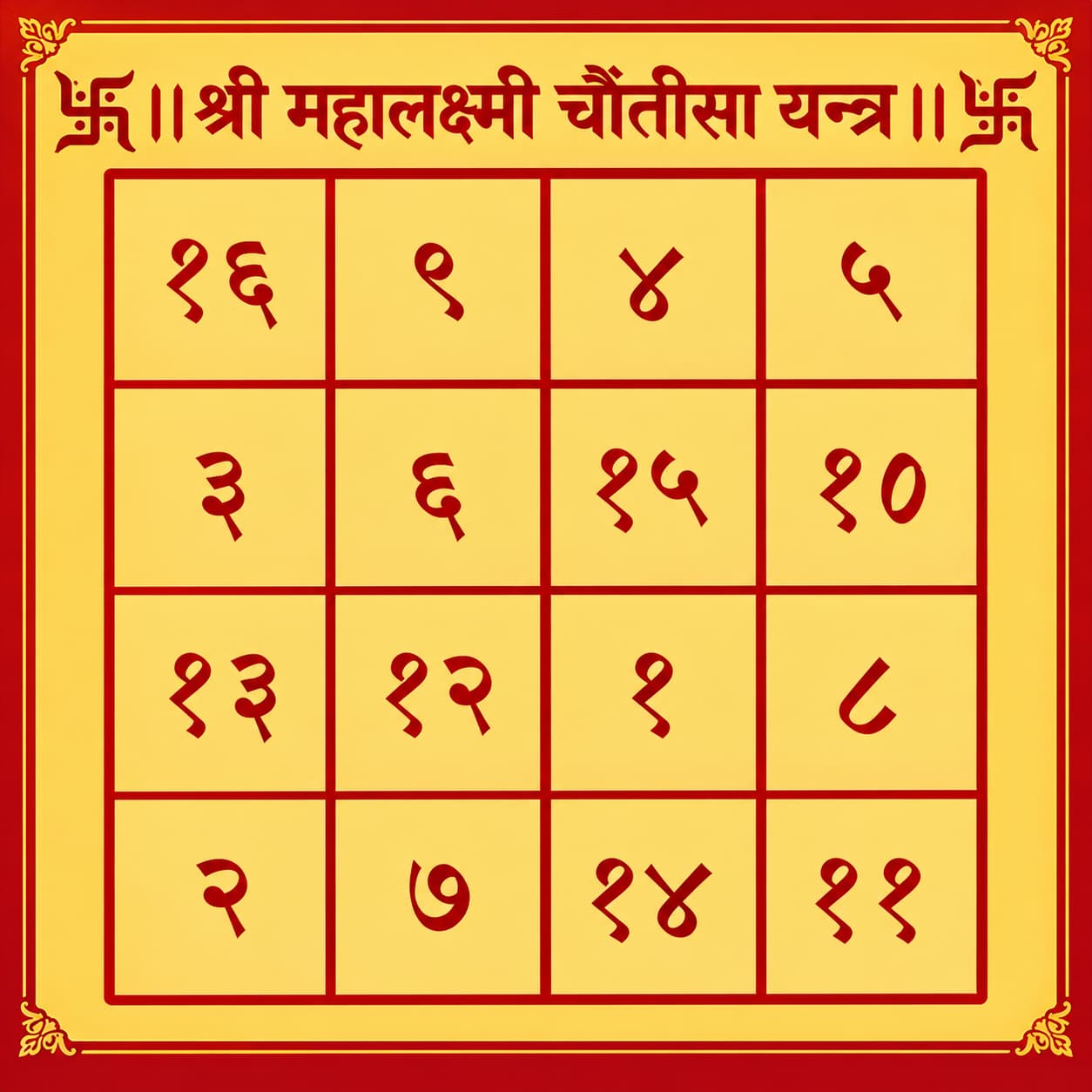
Prepare the Lakshmi Chauntisa Yantra
Chauntisa Yantra is associated in Yantra Sadhana with happiness and prosperity. The form dedicated to Goddess Lakshmi is known as the Lakshmi Chauntisa Yantra.
The described preparation uses Bhoja Patra, birch bark, red ink made from sandalwood paste, and a pen fashioned from pomegranate wood. The yantra is placed before Goddess Lakshmi during Diwali Puja.
On the following day, it is placed in the office or in the part of the home where money is kept, as a prayer for prosperity in household and business life. This customary preparation can be undertaken without a Pandit or astrologer once the prescribed materials are available.
Diwali worship at the workplace
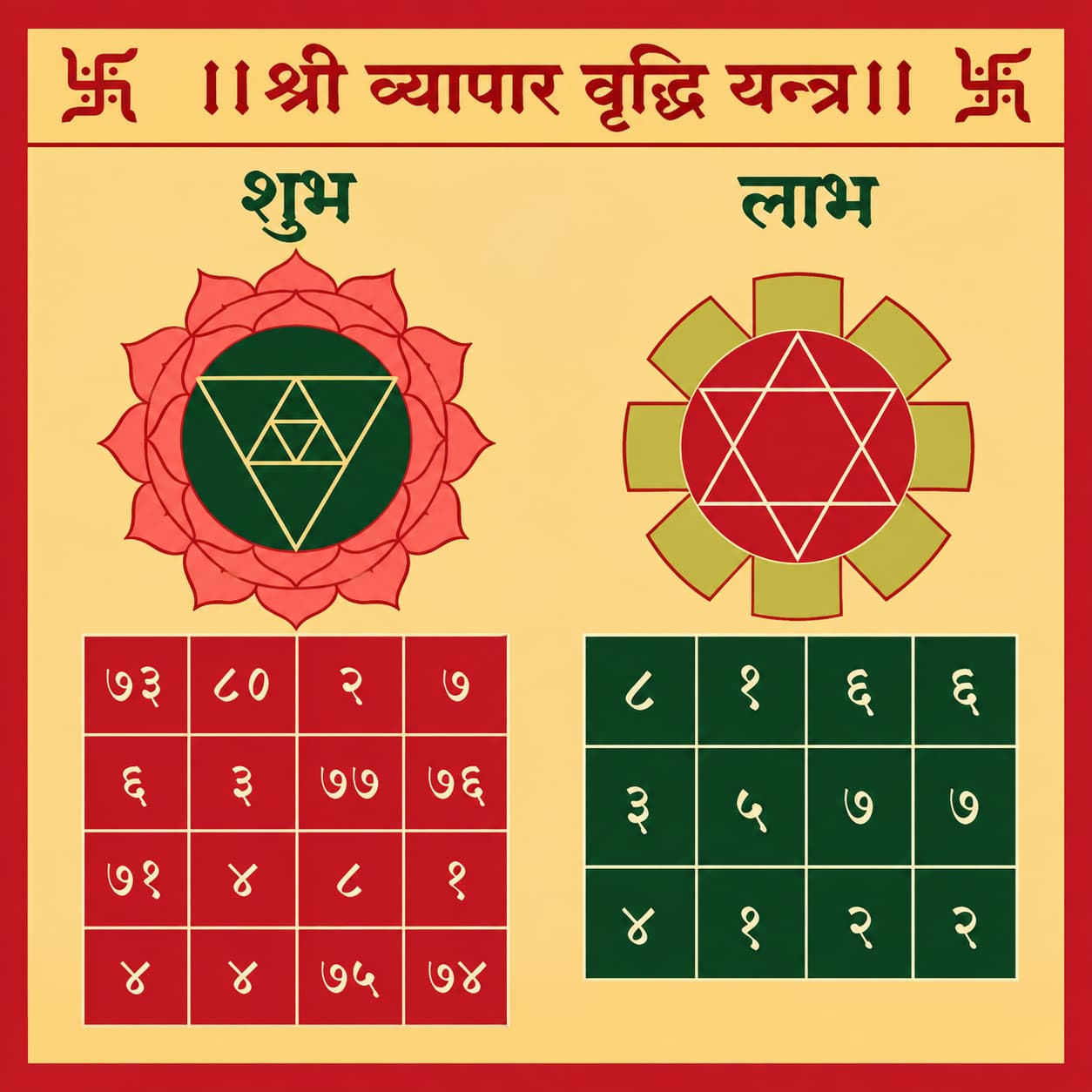
Prepare the Vyapar Vriddhi Yantra
Vyapar Vriddhi means growth in trade. This observance, traditionally followed by business owners, involves drawing the yantra at the workplace during Diwali Puja on Bhoja Patra, using Ashtagandha ink and a pomegranate-wood pen.
The Ashtagandha mixture described for this practice contains white sandalwood, red sandalwood, saffron, Kasturi, camphor, Agar, Tagar and Kumkum.
Vyapar Vriddhi Yantra consists of two yantras drawn next to each other. It is associated with prayers for business growth and is distinct from the Lakshmi-Ganesha Yantra.
When the materials are available, this customary preparation can be followed without a Pandit or astrologer. Keeping a purchased metal Vyapar Vriddhi Yantra at the Puja place is another traditional option.
Diwali Amavasya · with a learned Pandit
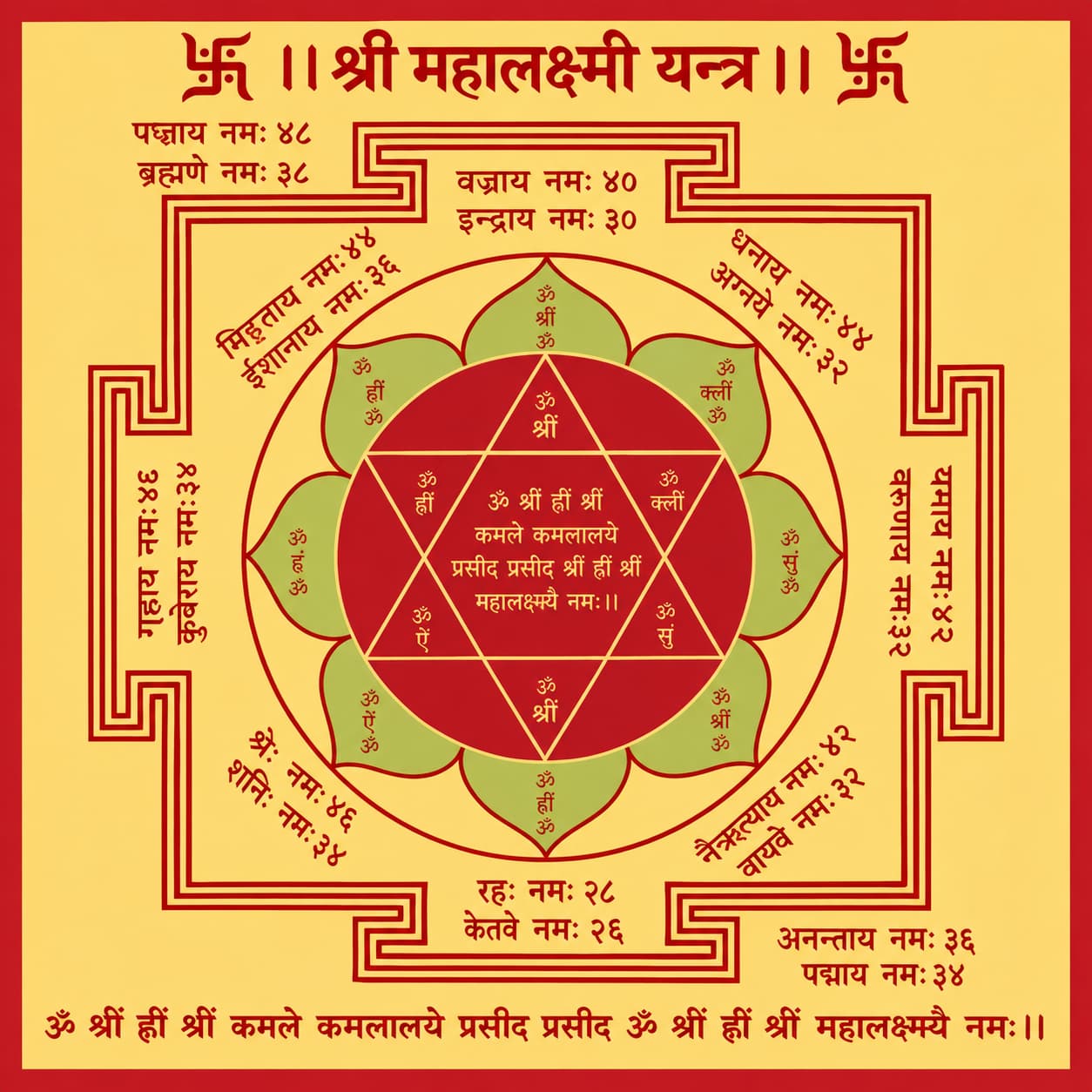
Worship and install the Mahalakshmi Yantra
Diwali Amavasya is regarded as especially significant for Mahalakshmi Yantra Puja and Sthapana, or installation, at home or in the office. Goddess Kamala, one of the Dasha Mahavidya, represents Goddess Lakshmi. Within the tradition described here, Lakshmi worship, including Shri Sukta Sadhana, is associated with Kamala Sadhana.
The Mool Mantra given for Mahalakshmi Yantra installation is dedicated to Kamala: ॐ श्रीं ह्रीं श्रीं कमले कमलालये प्रसीद प्रसीद ॐ श्रीं ह्रीं श्रीं महालक्ष्मयै नमः॥
Traditionally described as having 27 syllables, it is called the Saptavinshakshar (सप्तविंशाक्षर) Mantra. Mahalakshmi Yantra Puja is based on this mantra.
Formal Lakshmi Yantra Puja Vidhi includes several rites, among them six Avarana Puja, worship of the yantra’s ritual enclosures. Installation with the full prescribed rites on Deepavali should be performed by a learned Pandit; it is traditionally associated with prayers for enduring prosperity.
During Diwali Puja
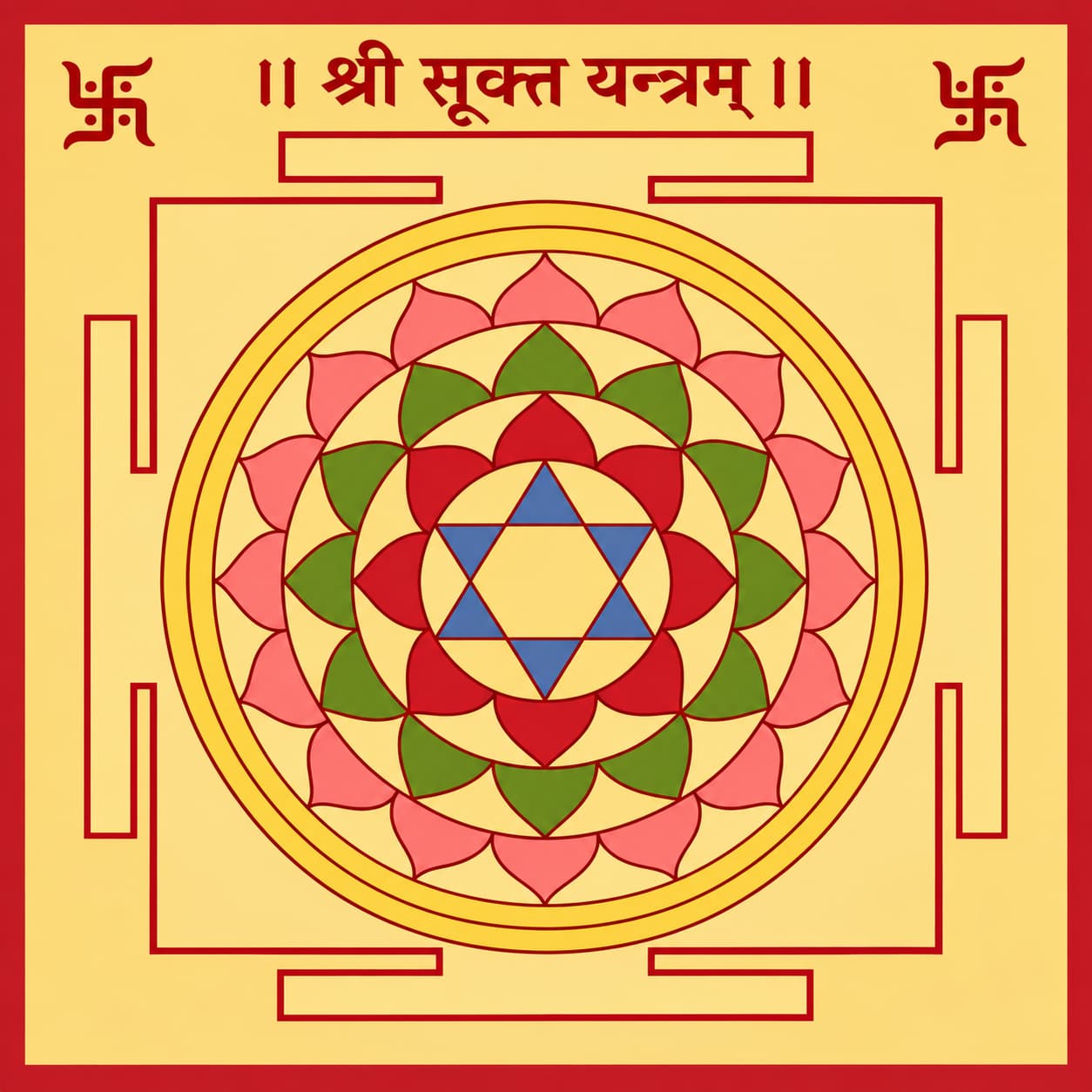
Worship with the Shri Sukta Yantra
Shri Sukta is a Vedic hymn praising Goddess Lakshmi. Worship of Lakshmi through this hymn is known as Shri Sukta Sadhana and is associated with the Shri Sukta Yantra.
Formal installation follows Shri Sukta Puja Vidhi together with other Vedic mantras. The complete ritual should be undertaken with a learned Pandit.
For a simpler household observance, the yantra is kept at the Puja place and worshipped with Goddess Lakshmi and Lord Ganesha during Diwali Puja, with recitation of Shri Sukta. Devotees traditionally associate this Sadhana with Lakshmi’s grace and lasting prosperity.
Devotional context
Understand the owl’s association with Lakshmi
The owl, known as Ullu, is revered in the devotional setting described here as a bird associated with Goddess Lakshmi and her vahana, or mount. This connection underlies traditions of seeking her blessings for wealth, happiness and prosperity on Diwali night.
These owl-related observances are also known as Ullu Diwali Totke. They form a separate topic within the wider traditions associated with Lakshmi worship.