The katha
Ganesha would not marry, it is said, and since he would not, he kept spoiling the weddings of the other gods, sending his mouse to dig up the ground under their wedding pavilions. The gods complained to Brahma, who created two daughters from his mind, Riddhi, prosperity, and Siddhi, accomplishment. Whenever the mouse came to make trouble, they distracted Ganesha with questions. In time Ganesha married them both. Riddhi bore him a son, Shubha, the auspicious, and Siddhi a son, Labha, gain.
One Raksha Bandhan, the story goes on, Shubha and Labha saw their aunt tie a rakhi on their father's wrist and asked why they had no sister. Ganesha, moved, called forth a flame from Riddhi and Siddhi, and from it a daughter was born, whom Narada named Santoshi, contentment. So Shubha and Labha had a sister, and the family of Ganesha came to hold all that a household wishes for: prosperity, success, auspiciousness, gain and contentment.
The katha is read to remember that gain follows good beginnings, and that contentment completes it.
Shubh Labh
At Diwali and on new account books, traders write "Shubh" and "Labh" on either side of the swastika, invoking Ganesha's sons for an auspicious and profitable year. On Labha Chaturthi Ganesha is worshipped with Lakshmi for the same blessing.
Keeping the fast
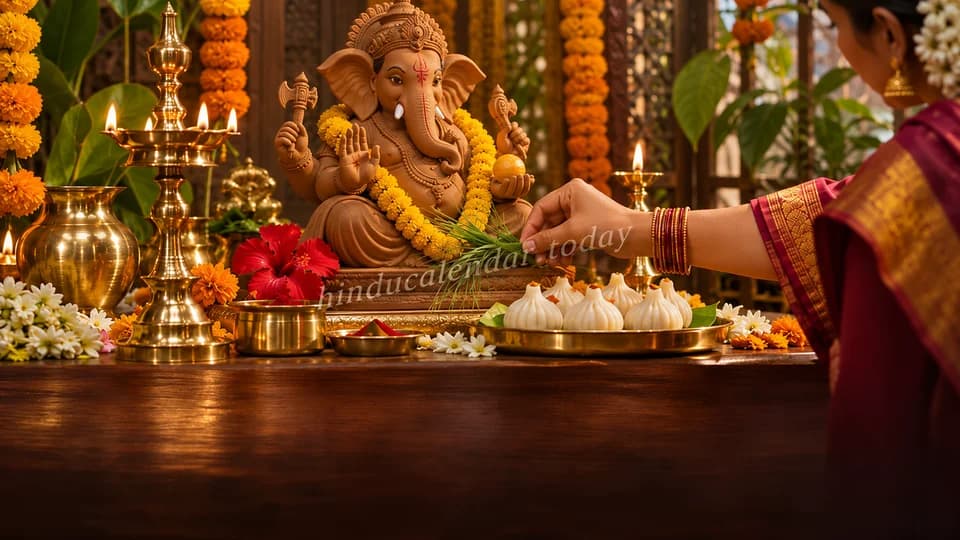
Vinayaka Chaturthi is kept on the fourth day of the waxing Moon. Ganesha is worshipped at midday, the hour of his birth, with 21 blades of durva grass, red flowers, sandal and 21 modaks or laddoos, and the katha is read. Some fast until evening, some take one meal. The Moon is not looked at on this night.