The four groups
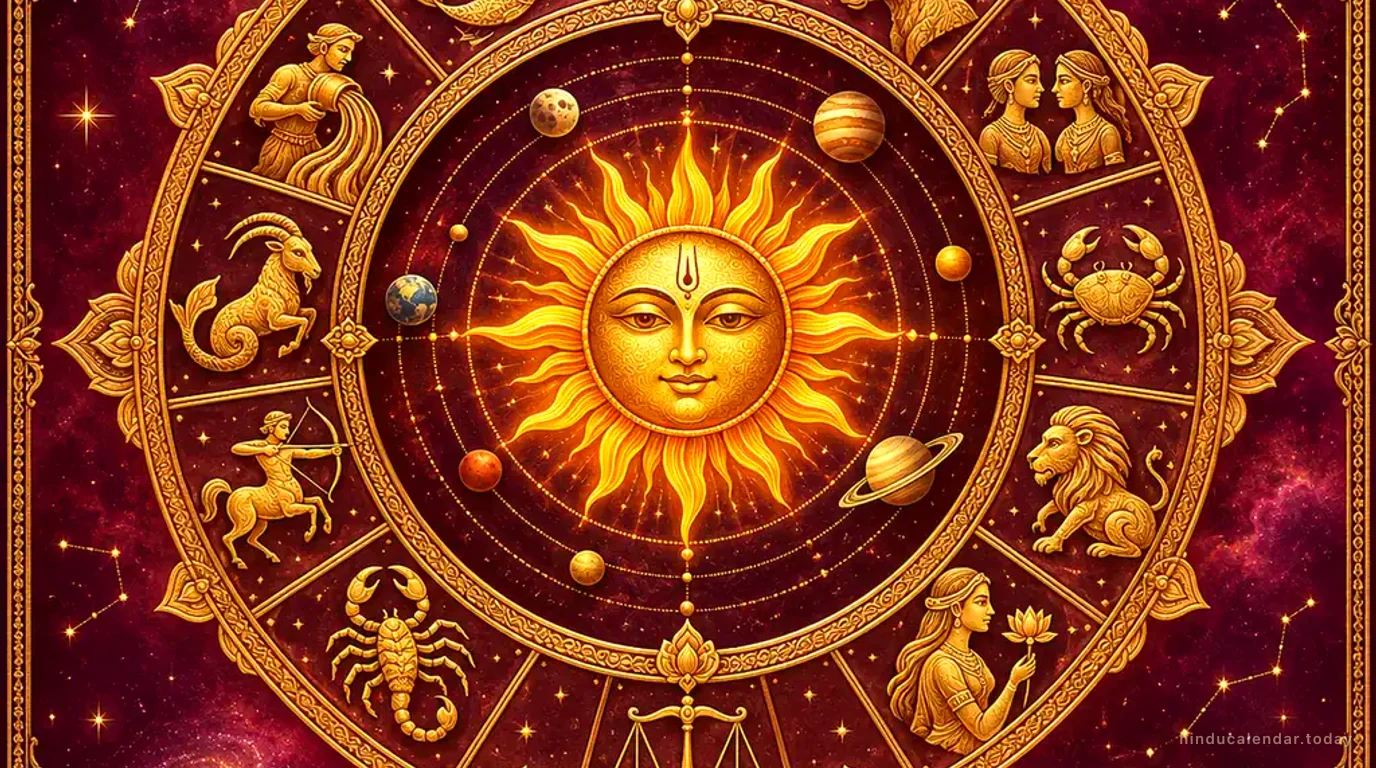
Each Moon sign is placed in one of four groups, called varnas, following the element of the sign. The water signs, Karka, Vrischika and Meena, are Brahmin. The fire signs, Mesha, Simha and Dhanu, are Kshatriya. The earth signs, Vrishabha, Kanya and Makara, are Vaishya. The air signs, Mithuna, Tula and Kumbha, are Shudra.
These are traditional astrological labels for the sign. They have nothing to do with a person's birth, caste or worth, and the horoscope match page uses them only as categories.
How it is scored
The groups are ranked from Brahmin (highest) to Shudra. If the groom's Moon-sign group is the same as or higher than the bride's, the couple get one point; if it is lower, they get none. So a groom with the Moon in Karka (Brahmin) and a bride with the Moon in Mesha (Kshatriya) score 1, while the reverse scores 0.
How much it matters
With one point of thirty-six, Varna Kuta has little weight on its own. Astrologers look at the total, usually seeking 18 or more, and at the larger kutas, Bhakoot (7) and Nadi (8), and then at the whole of the two charts. Many traditions also allow the lack of a point to be offset by the friendship of the Moon-sign lords.