Setting it up
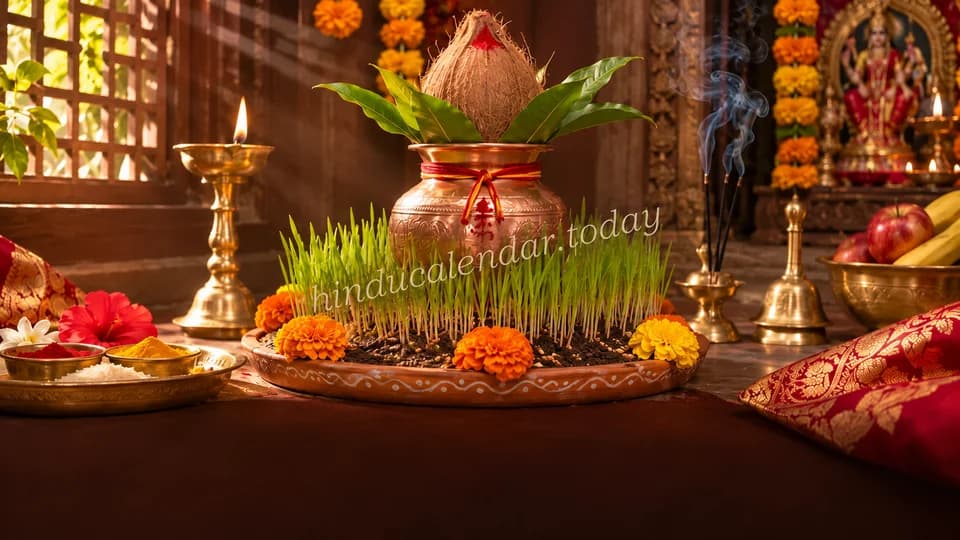
A large brass or clay lamp is used, deep enough to hold fuel for many hours, with a long, thick cotton wick. It is placed on a bed of rice or grain on the altar, protected from draughts by a glass chimney. A ghee lamp is placed to the right of the goddess (the worshipper's left), an oil lamp to her left. It is lit after the Ghatasthapana with a prayer to the goddess to stay in the home through the nine days.
Keeping it alight
The lamp must not go out. Someone in the family takes responsibility for adding fuel and trimming the wick, day and night, and the house is never left empty while it burns. If it goes out by accident, the goddess is asked for forgiveness and it is relit. Those who cannot keep an unbroken flame light a lamp morning and evening instead; devotion, not the flame, is what matters.
In Chhattisgarh and Madhya Pradesh, temples of the goddess such as those at Ratanpur and Dongargarh glow with thousands of jyoti kalash lit by devotees for their vows.
Its meaning
The steady flame is the presence of the goddess, the light of knowledge and the steadiness of the devotee's mind through the nine days of worship and fasting. At the end of Navratri the flame is allowed to go out on its own, not blown out.