The puja
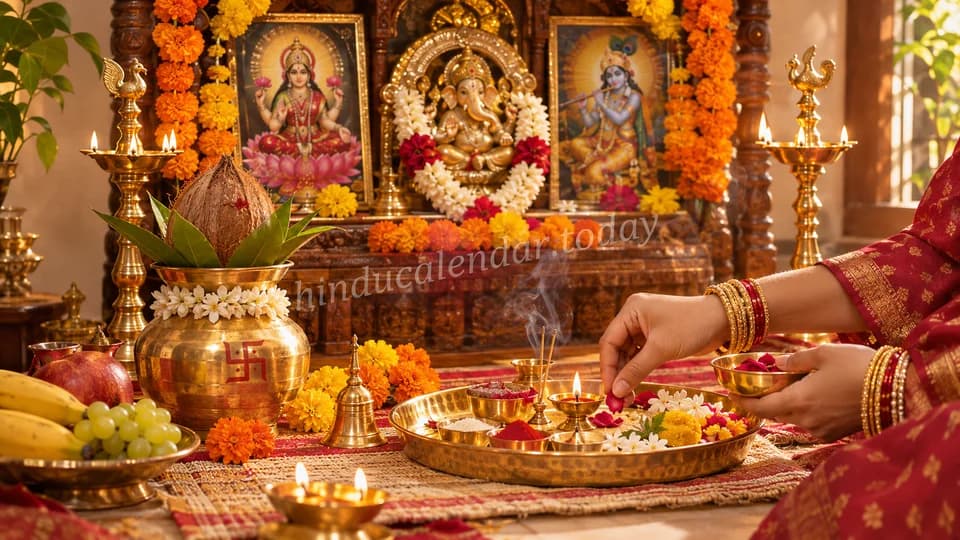
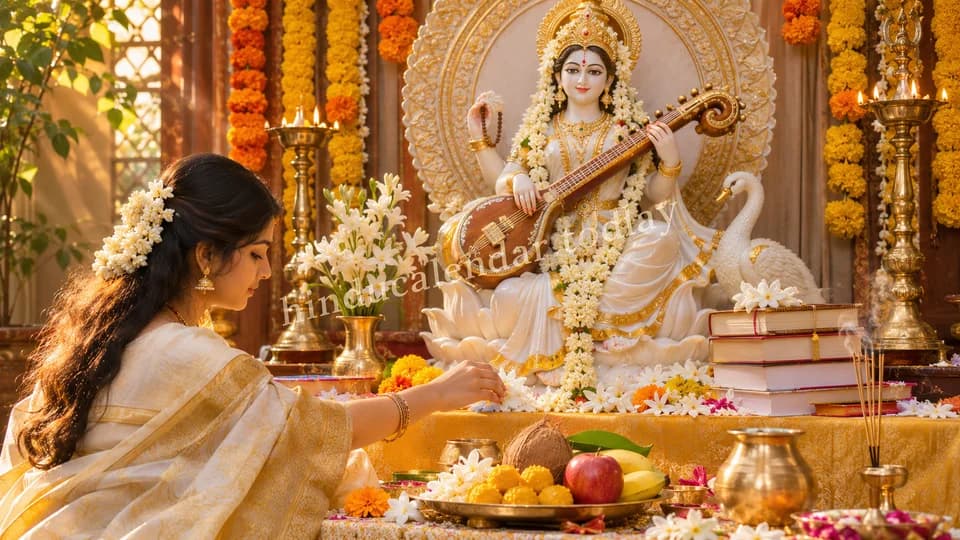
Clean the place and set an image of Saraswati on a white or yellow cloth. Place books, notebooks, pens, musical instruments and tools of one's work before her. Wear white or yellow. After purifying yourself, make the sankalpa, worship Ganesha and the kalash.
Meditate on Saraswati with the verse "Ya kundendu tusharahara dhavala ya shubhravastravrita", the goddess white as jasmine, the Moon and snow, dressed in white, holding the vina, seated on a white lotus. Then worship her with the sixteen offerings.
The sixteen offerings (shodashopachara) are: meditation on the deity and invitation (dhyana, avahana); a seat (asana); water to wash the feet (padya); water for the hands (arghya); water to sip (achamana); a bath (snana), with panchamrita and then pure water; clothes (vastra); the sacred thread (yajnopavita); sandal paste (gandha); flowers (pushpa); incense (dhupa); a lamp (dipa); food (naivedya); betel leaf and dakshina (tambula); the waving of lights (nirajana or aarti); and circling and bowing with an offering of flowers (pradakshina, namaskara, pushpanjali). Lists differ slightly between traditions.
Her offerings
Offer white sandal, white and yellow flowers such as jasmine and marigold, akshata, and in Bengal palash flowers and the first plums (kul) of the season, which are not eaten until offered to her. As naivedya offer kheer, yellow rice, boondi and fruit. Chant Om Aim Saraswatyai Namah 108 times and sing her vandana and aarti.
Vidyarambha
Small children are often begun on their letters on this day: the child writes "Om" or the first letter of the alphabet in rice or on a slate, guided by a parent or teacher. The next day, after the visarjan, the books are taken up again with a prayer, and study resumes.