The katha
King Abhinandana once began a great yajna in which he would make no offering to Indra, hoping to win the throne of heaven for himself. Indra, alarmed, sent Kala, the spirit of time and death, to wreck it. Kala took the form of a demon, Vighnasura, the maker of obstacles. He destroyed the king's yajna, and then went on to spoil every sacrifice and every good work in the world, so that the sages could perform no rites at all.
The sages prayed to Ganesha. He came and fought Vighnasura, and the demon, unable to win, surrendered. Ganesha spared him on two conditions: that he would never again trouble a place where Ganesha was worshipped, and that he would leave alone any work begun with Ganesha's name. Vighnasura agreed, and asked only one thing in return: that Ganesha take his name, so that he would be remembered. So Ganesha became Vighneshvara, lord of obstacles.
The grateful sages built the temple at Ozar, where Vighneshwar still stands. The story is the reason Ganesha's name is spoken at the start of every work.
Remover and placer of obstacles
As Vighneshvara, Ganesha both removes obstacles and places them: he clears the way for the sincere and blocks the path of those who act from pride. To begin with his name is to ask that the work be worthy of success.
Keeping the fast
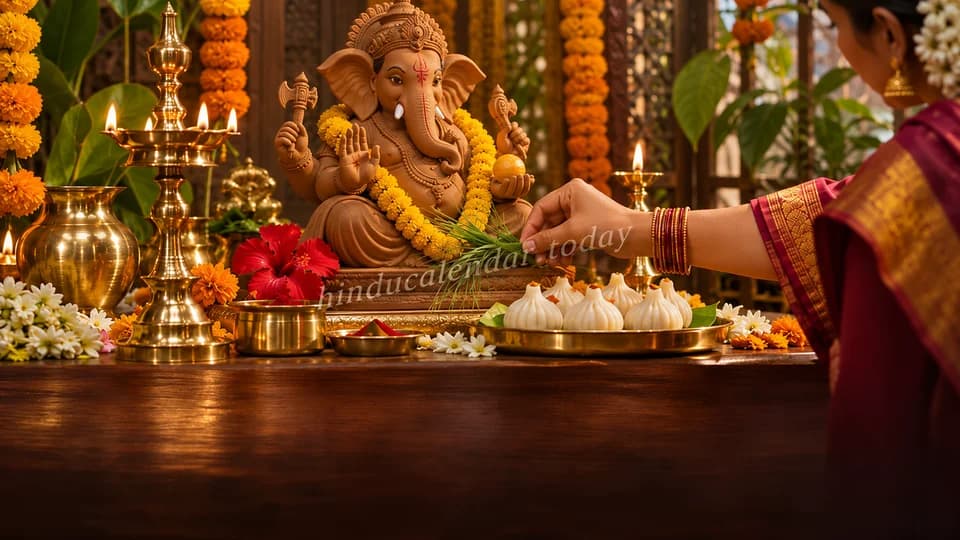
Vinayaka Chaturthi is kept on the fourth day of the waxing Moon. Ganesha is worshipped at midday, the hour of his birth, with 21 blades of durva grass, red flowers, sandal and 21 modaks or laddoos, and the katha is read. Some fast until evening, some take one meal. The Moon is not looked at on this night.