When it is done
The udyapan is performed when the vow is complete, on an Ekadashi. Many choose the Margashirsha Ekadashis, Utpanna or Mokshada, since Utpanna is the day Ekadashi was born and the vow is often begun on it. Others complete it on Nirjala, Devshayani or Prabodhini Ekadashi.
The ceremony
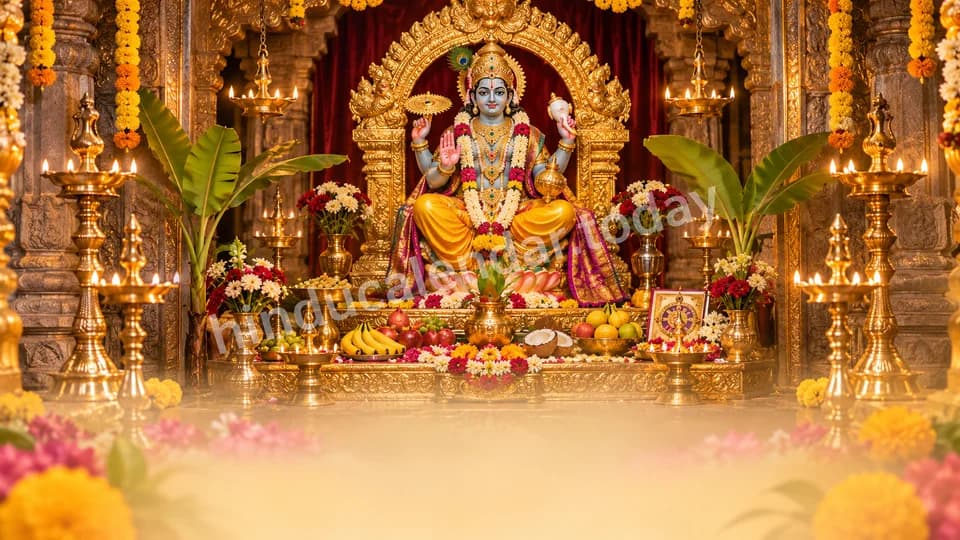
On the Dashami a single meal is taken. On the Ekadashi a canopy (mandapa) is set up and decorated with banana stems and flowers. A kalash is placed in the centre with images of Lakshmi and Narayana, and they are worshipped with the sixteen offerings. Ganesha and the Navagraha are worshipped first. The katha is read and the night is spent in vigil and bhajan.
On the Dwadashi a homa is performed with sesame, ghee and barley, offering 108 or 1008 oblations with the Vishnu mantra. Then Brahmins are fed, often twelve, twenty-four or twenty-six, one for each Ekadashi of the vow, with their wives, and given dakshina. Gifts are given: clothes, an umbrella, sandals, a water pot, grain, and, according to one's means, a cow or gold. The guru or priest is honoured, and the family then breaks the fast together.
If one cannot do it fully
The texts allow the udyapan to be done according to one's means: what matters is devotion. A simple worship, feeding a few people with love and giving what one can is accepted. After the udyapan many continue to keep the Ekadashis as before.