
Dhanteras
The auspicious first day of Diwali celebrating health, wealth, and the appearance of Lord Dhanvantari with the pot of Amrita.
Auspicious Muhurat & Puja Timings
India•6 November 2026
Auspicious evening window during Pradosha Kaal and Vrishabha Lagna for buying metals/utensils and worshiping Lord Dhanvantari.
Key Observance Timings
Auspicious twilight window for Dhanvantari, Lakshmi, and Kubera worship
Fixed astrological ascendant for stable and enduring wealth and health
Evening lighting of sacred earthen lamp facing South to ward off untimely demise
Significance & Spiritual Meaning
Spiritual philosophy, inner meaning and eternal virtues
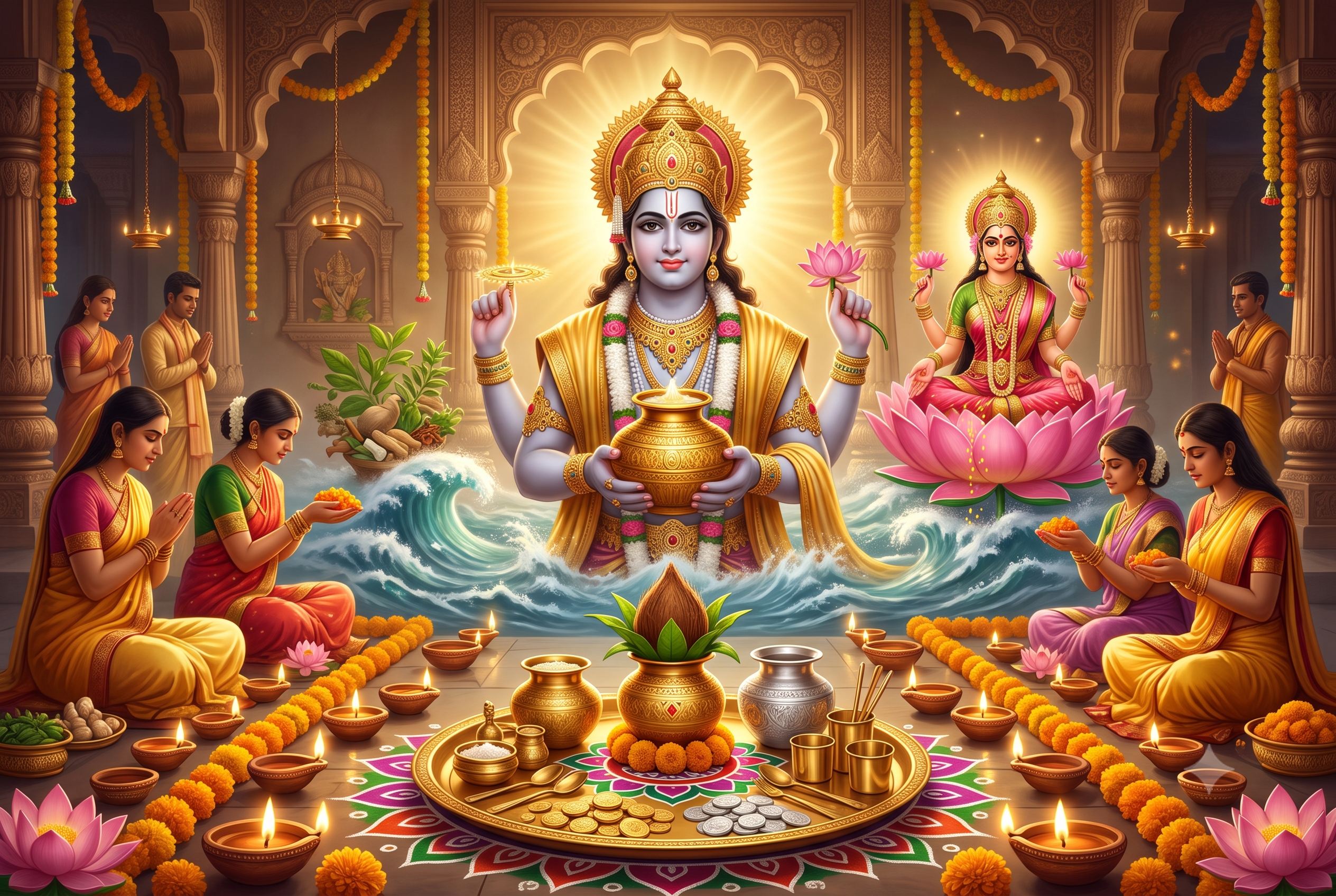
Dhanteras (also known as Dhantrayodashi) falls on the thirteenth lunar day (Trayodashi) of Krishna Paksha in Kartika month, inaugurating the five-day Diwali celebrations. On this day, Lord Dhanvantari—the divine physician and fourteenth jewel of the Samudra Manthan—manifested holding the sacred pot of nectar (Amrita Kalash) and the foundational wisdom of Ayurveda. Devotees worship Goddess Lakshmi and Lord Kubera for righteous wealth, and Lord Dhanvantari for good health and disease-free longevity. In the evening, the sacred Yama Deepam (a four-faced flour lamp) is lit outside the home facing south to ward off premature death and misfortunes. Buying new utensils, brass, copper, silver coins, or gold is considered extremely auspicious.
Dhanteras highlights that true wealth (Dhana) begins with good health (Arogya): 1. Lord Dhanvantari Appearance: Honors the father of Ayurveda, who bestows physical vitality, immunity, and healing. 2. Yama Deepam: Protects families from untimely demise (Apamrityu Haranam). 3. Purchase of Metal & Prosperity: Bringing new metals into the house invites stable positive vibrations.
Sacred Story & Divine Lore
Scriptural history and divine legends in sacred lore
"When young King Hima was prophesied to die from a snakebite on his 16th day after marriage, his clever bride placed heaps of gold, silver, and lighted lamps at the doorway. Lord Yama, arriving as a serpent, was dazzled by the light and stayed listening to songs until the death hour passed."
Key Rituals & Observance
Step-by-step sacred rituals and worship practices
Purchasing new metal utensils (brass/copper), silver coins, gold, or kitchenware during auspicious Shubh/Choghadiya muhurat.
Dhanvantari Puja in the evening with fresh flowers, sandalwood paste, and tulsi leaves.
Kubera and Lakshmi Puja placing newly purchased items before the deity altar.
Lighting the four-faced Yama Deepam lamp facing south at twilight.
Thoroughly cleaning and decorating the house with fresh rangolis and earthen lamps.
Sacred Deity & Powerful Mantras
Lord Dhanvantari (God of Ayurveda & Health), Maa Lakshmi, Lord Kubera & Yama • Vedic and Puranic chants for peace and blessings
Dhanvantari Maha Mantra (धन्वन्तरि महामंत्र)
ॐ नमो भगवते महासुदर्शनाय वासुदेवाय धन्वन्तरयेः अमृतकलशहस्ताय सर्वभयविनाशाय सर्वरोगनिवारणाय त्रिलोकपतये त्रिलोकनाथाय श्रीमहाविष्णुस्वरूपाय श्रीधन्वन्तरिस्वरूपाय श्रीश्रीश्री औषधचक्राय नारायणाय नमः ॥
Om Namo Bhagavate Maha-Sudarshanaya Vasudevaya Dhanvantaraye, Amrita-Kalasha-Hastaya Sarva-Bhaya-Vinashaya Sarva-Roga-Nivaranaya
Yama Deepam Mantra (यम दीप दान मंत्र)
मृत्युना पाशदण्डाभ्यां कालेन श्यामया सह । त्रयोदश्यां दीपदानात् सूर्यजः प्रीयतां मम ॥
Mrityuna Pasha-Dandabhyam Kalena Shyamaya Saha, Trayodashyam Deepadanat Suryajah Priyatam Mama
Regional Celebrations & Heritage
Diverse cultural and spiritual traditions across Bharat and worldwide
Bustling markets stay open late into the night as millions purchase gold coins, silver idols, brass vessels, kitchen appliances, and new vehicles.
Observed as National Ayurveda Day across India with medical symposiums, herbal exhibitions, and prayers to Lord Dhanvantari for public health.
Traditional Bhog & Sacred Offerings
Sacred food offerings prepared with devotion