
Significance & Spiritual Meaning
Spiritual philosophy, inner meaning and eternal virtues
Diwali (Deepavali, meaning "row of lighted lamps") is the paramount festival of Sanatana Dharma, celebrated across India and the global diaspora on the darkest new moon night (Amavasya) of the Hindu month of Kartika. The five-day festival sequence—commencing with Dhanteras, followed by Naraka Chaturdashi (Chhoti Diwali), Lakshmi Puja, Govardhan Puja, and concluding with Bhai Dooj—transforms cities and homes into luminous realms of gold, light, and joy. During the auspicious Pradosha Kaal and stable Vrishabha Lagna, families gather in traditional festive attire to welcome Goddess Mahalakshmi, the embodiment of auspiciousness, spiritual wealth, and cosmic grace, alongside Lord Ganesha, the remover of obstacles, and Lord Kubera, the treasurer of celestial abundance.
Diwali holds multilayered cosmic, historical, and spiritual meanings: 1. Inner Illumination (Atma Jyoti): Lighting earthen clay lamps (Diyas) symbolizes the triumph of spiritual awareness over the darkness of ego, ignorance, and greed. 2. Return of Lord Shri Rama: Marks the jubilant homecoming of Lord Rama, Mata Sita, and Lakshmana to Ayodhya after 14 years of exile and the defeat of the demon king Ravana. 3. Emergence of Goddess Lakshmi: Commemorates the manifestation of Goddess Lakshmi from the churning of the celestial ocean (Samudra Manthan) on Kartika Amavasya. 4. Business Renewal & Prosperity: Traders inaugurate new financial ledgers (Chopda Pujan) seeking righteous wealth (Dharma-Artha) and fair enterprise.
Sacred Story & Divine Lore
Scriptural history and divine legends in sacred lore
“On Kartika Amavasya, Lord Rama returned to Ayodhya after vanquishing Ravana, and the citizens illuminated every street and home with earthen oil lamps. Simultaneously, Goddess Mahalakshmi emerged from the cosmic Samudra Manthan, showering boundless blessings on all beings.”
Key Rituals & Observance
Step-by-step sacred rituals and worship practices
- 1Step 1
Deepdaan: Lighting rows of earthen ghee/mustard oil lamps throughout the home at twilight.
- 2Step 2
Cleaning, whitewashing, and adorning the house with mango leaves, marigold garlands, and vibrant rangolis.
- 3Step 3
Performing Shodashopachara Lakshmi-Ganesha Puja during Pradosha Kaal.
- 4Step 4
Offering lotus flowers, Kheer, Batasha, sugarcane, puffed rice (Kheel), and seasonal fruits to Maa Lakshmi.
- 5Step 5
Conducting Chopda Pujan (worship of account books and commercial tools).
- 6Step 6
Distributing sweets, clothing, and charity to the underprivileged.
Sacred Deity & Powerful Mantras
Maa Mahalakshmi, Lord Ganesha, Lord Kubera & Lord Rama • Vedic and Puranic chants for peace and blessings
Mahalakshmi Mool Mantra (महालक्ष्मी मूल मंत्र)
ॐ श्रीं ह्रीं श्रीं कमले कमलालये प्रसीद प्रसीद ॐ श्रीं ह्रीं श्रीं महालक्ष्म्यै नमः ॥
Om Shreem Hreem Shreem Kamale Kamalalaye Praseeda Praseeda Om Shreem Hreem Shreem Mahalakshmyai Namah
Lakshmi Gayatri Mantra (लक्ष्मी गायत्री मंत्र)
ॐ महालक्ष्म्यै च विद्महे विष्णुपत्न्यै च धीमहि । तन्नो लक्ष्मीः प्रचोदयात् ॥
Om Mahalakshmyai Cha Vidmahe Vishnu-Patnyai Cha Dhimahi, Tanno Lakshmih Prachodayat
Kubera Mantra (कुबेर धन प्रदाता मंत्र)
ॐ यक्षाय कुबेराय वैश्रवणाय धनधान्याधिपतये । धनधान्यसमृद्धिं मे देहि दापय स्वाहा ॥
Om Yakshaya Kuberaya Vaishravanaya Dhana-Dhanyadhipataye, Dhana-Dhanya-Samriddhim Me Dehi Dapaya Swaha
Sacred Aarti & Hymns
Devotional verses and traditional stuti for prayer
ॐ जय लक्ष्मी माता, मैया जय लक्ष्मी माता । तुमको निसदिन सेवत, हर विष्णु विधाता ॥ ॐ जय लक्ष्मी माता...
उमा, रमा, ब्रह्माणी, तुम ही जग-माता । सूर्य-चन्द्रमा ध्यावत, नारद ऋषि गाता ॥ ॐ जय लक्ष्मी माता...
दुर्गा रूप निरंजनि, सुख सम्पति दाता । जो कोई तुमको ध्यावत, ऋद्धि-सिद्धि धन पाता ॥ ॐ जय लक्ष्मी माता...
जिस घर में तुम रहतीं, सब सद्गुण आता । सब संभव हो जाता, मन नहीं घबराता ॥ ॐ जय लक्ष्मी माता...
तुम बिन यज्ञ न होते, वस्त्र न कोई पाता । खान-पान का वैभव, सब तुमसे आता ॥ ॐ जय लक्ष्मी माता...
शुभ-गुण मंदिर सुंदर, क्षीरोदधि-जाता । रत्न चतुर्दश तुम बिन, कोई नहीं पाता ॥ ॐ जय लक्ष्मी माता...
महालक्ष्मी जी की आरती, जो कोई नर गाता । उर आनंद समाता, पाप उतर जाता ॥ ॐ जय लक्ष्मी माता...
Regional Celebrations & Heritage
Diverse cultural and spiritual traditions across Bharat and worldwide
Homes are decorated with elaborate rangolis, torans of mango leaves, and clay diyas. Business owners perform Chopda Pujan (worship of new accounting ledgers with saffron swastikas) during auspicious muhurat.
On Diwali night, devotees worship Goddess Kali—the fierce destroyer of darkness and ego. Grand night-long pujas with hibiscus flowers, khichuri, and sweets are organized across pandals and homes.
Celebrations begin before dawn on Naraka Chaturdashi with an auspicious oil bath (Ganga Snanam), wearing new clothes, tasting medicinal Diwali Lehyam (herbal digestive jam), and bursting crackers.
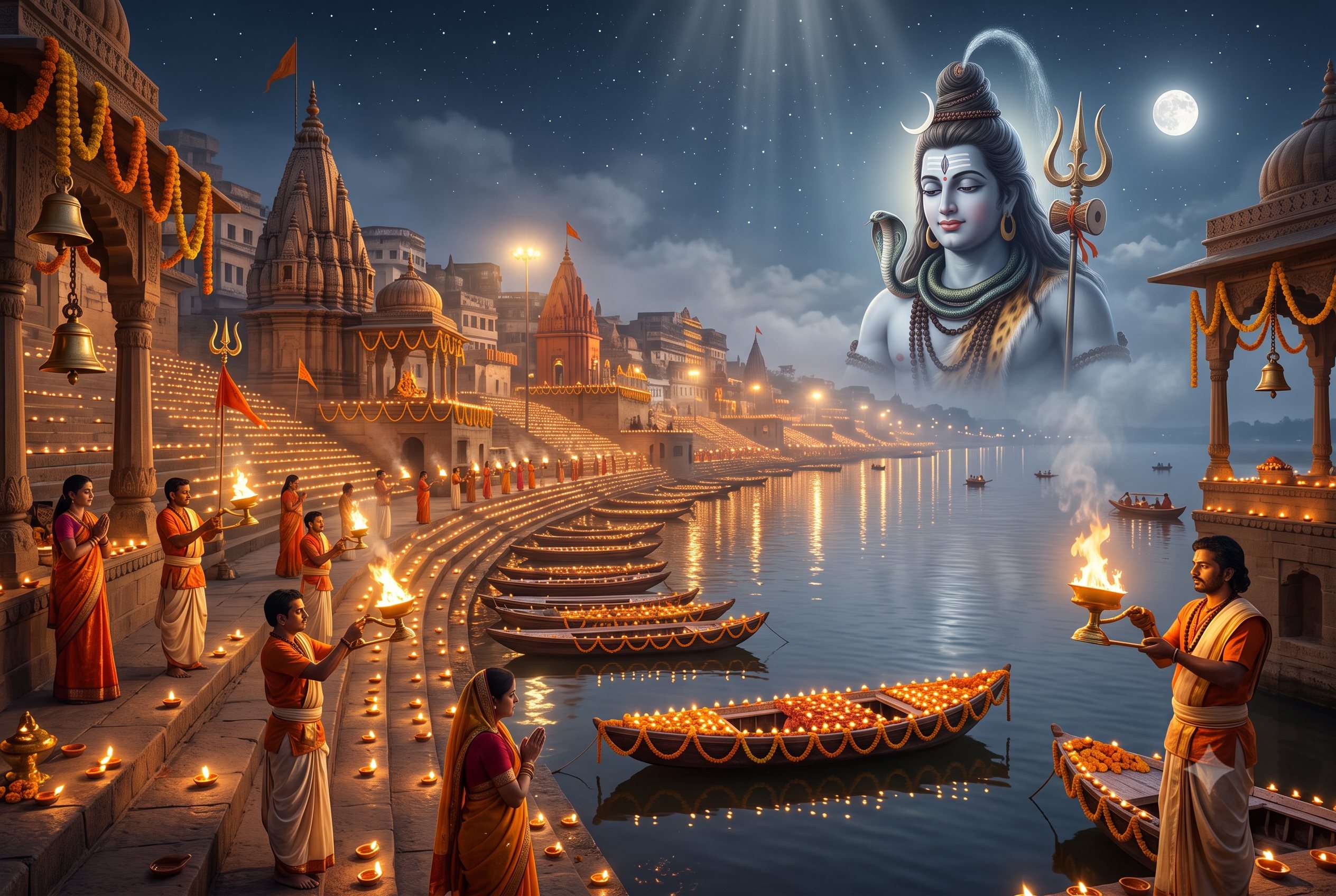
The ghats of the sacred Ganga in Varanasi and Sarayu in Ayodhya are illuminated with millions of earthen lamps, creating awe-inspiring celestial riverfronts with grand Maha Aarti.
Traditional Bhog & Sacred Offerings
Sacred food offerings prepared with devotion