How it is found
A lunar month runs from one new Moon to the next, about 29.5 days, and the Sun usually moves into a new sign (a Sankranti) during each one. Because the Sun takes slightly longer than a lunar month to cross a sign, now and then a lunar month passes with no Sankranti at all. That month is Adhik, extra, and it takes the name of the month that follows it: an Adhik Shravana is followed by the regular (Nija) Shravana. Very rarely a month with two Sankrantis becomes a lost month (Kshaya Maas).
Purushottam Maas
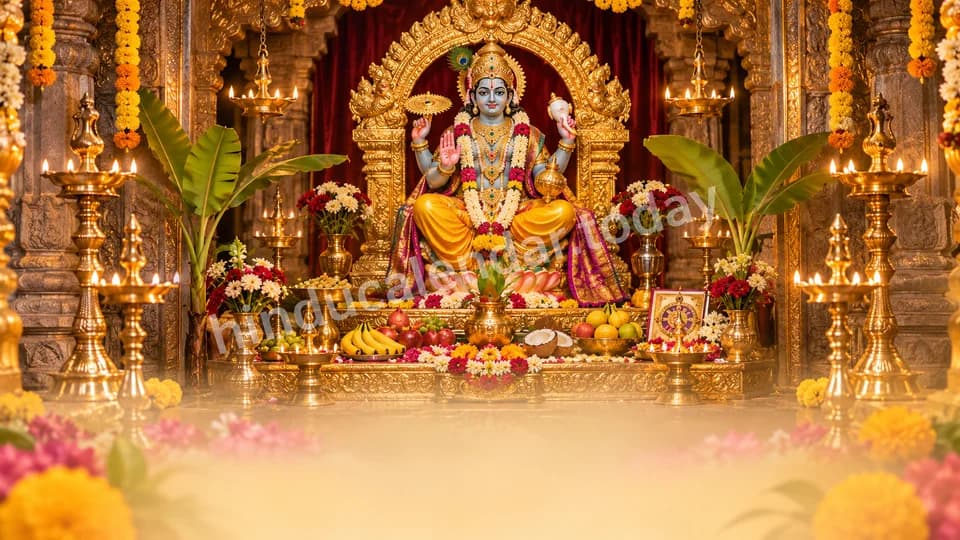
The Puranas tell that the extra month, having no Sankranti and no presiding deity, was despised and called Mala Maas, the impure month. It went to Vishnu in sorrow, and Vishnu took it as his own, giving it his name Purushottama and declaring that devotion in it would bring more merit than in any other month.
So no weddings, housewarmings, thread ceremonies or other new beginnings are held in Adhik Maas, but it is a month for devotion: reading the Bhagavata or the Purushottam Maas Mahatmya, fasting, giving, bathing in holy rivers and worshipping Vishnu. Its two Ekadashis, Padmini and Parama, come only in leap years.
Festivals in a leap year
Festivals are kept in the regular (Nija) month, not in the Adhik month that comes before it: in a year with an Adhik Shravana, for example, Raksha Bandhan falls on the full Moon of the Nija Shravana, a month later than it would otherwise come. That is why some festivals seem late in a leap year.