The katha
When the Pandavas were in exile, Yudhishthira asked Krishna how their suffering could end, and Krishna told him of the Ananta vrat and this story.
The Brahmin Sumantu had a daughter, Sushila. After her mother died her stepmother made her life hard, and when she married the sage Kaundinya they left with almost nothing. On the way, by a river, Sushila saw women worshipping Ananta and learned the vrat from them. She kept it, tied the fourteen-knotted thread on her arm, and from then on the couple prospered.
One day Kaundinya noticed the thread and asked what it was. When she told him, he thought it was a charm to bind him, and in anger tore it off and threw it into the fire. From that day their fortune left them: they lost their wealth, their cattle and their friends. Kaundinya understood his fault and went into the forest to find Ananta and beg forgiveness.
He asked a mango tree, a cow, a bull, two lakes, a donkey and an elephant whether they had seen Ananta, and none could tell him. Exhausted, he fell to the ground. Then an old Brahmin lifted him up and led him to a cave, where the Brahmin showed himself as Vishnu. He forgave Kaundinya and told him to keep the vrat for fourteen years. He also explained that the tree, the animals and the lakes were souls who had been selfish in past lives. Kaundinya and Sushila kept the vrat, and their happiness returned.
Keeping the vrat
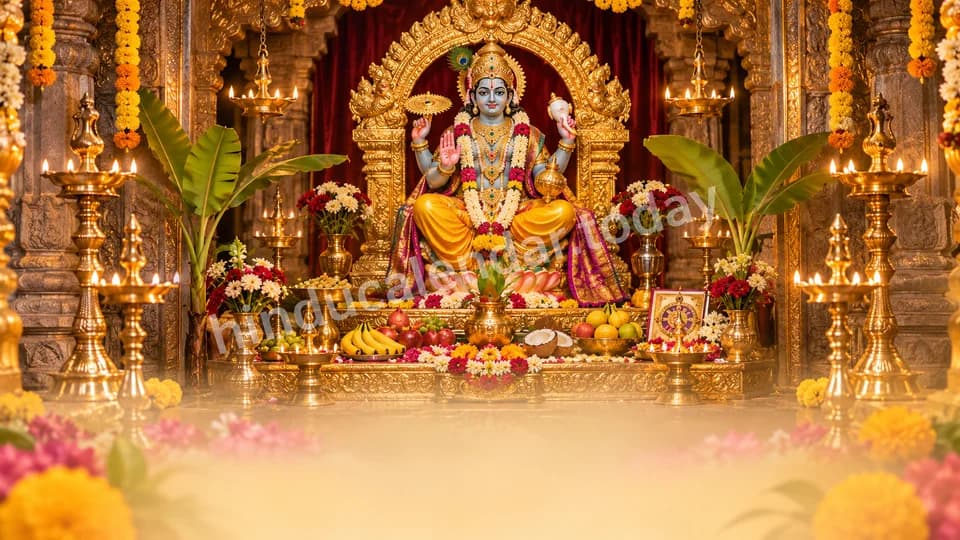
Vishnu is worshipped as Ananta, often on a figure of the serpent Shesha made of darbha grass, with a new thread dyed with turmeric and tied in fourteen knots. After the katha the thread is tied on the arm, and many eat only once, without salt. In Maharashtra the Ganesha images are immersed on this day.