The katha
In Magadha lived a learned Brahmin named Valit, who was very poor. His wife was quarrelsome and did the opposite of whatever he asked, so he learned to ask for the opposite of what he wanted. When his father's shraddha came, he told her to throw the pinda offerings into a ditch, and she, to spite him, offered them properly in the holy river. But then, forgetting himself, he said aloud the right thing to do, and she did the opposite. In despair Valit left home.
Wandering in the forest, he came upon three daughters of the Naga king, who had kept the Kojagara vrat and were sitting up through the night. They invited him to play dice with them so that they could stay awake. As the night passed Valit played, and Lakshmi, passing by with her question "Ko jagarti?", found him awake. Pleased, she blessed him. He won great wealth at the game, the Naga king gave him his daughters in marriage, and he returned home rich.
The story is told to show that Lakshmi does not visit those who sleep through her night: one must stay awake, in body and in mind, to receive her.
The night of the full Moon
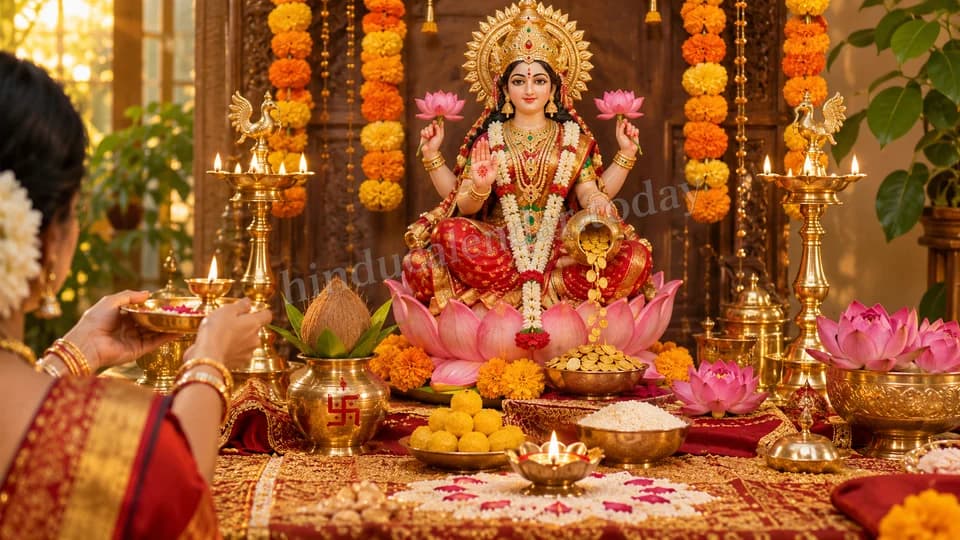
Sharad Purnima is the brightest full Moon of the year, and the Moon is said to shower nectar on it. Kheer is left out in the moonlight and eaten in the morning as prasad. In Bengal the goddess is worshipped at home with alpana patterns of her feet drawn from the door to the altar.
Keeping the vrat
The vrat begins with a bath and a resolve (sankalpa). The deity is worshipped with flowers, sandal, incense, a lamp and the offerings of the day, the katha is read or heard with rice or flowers held in the hand, and the aarti is sung. The fast is broken after the worship with the prasad.
Lakshmi is worshipped at night, and the family stays awake with songs and games until dawn.