The katha
Parvati wished for an attendant of her own, one who would obey only her, since even her doorkeepers were Shiva's ganas. While she bathed she shaped a boy from the turmeric paste of her body, breathed life into him and set him at her door with a staff, telling him to let no one in.
Shiva came home and the boy barred the way. Shiva's ganas tried to push past him and were beaten back; even the gods who came to help could not move him. At last Shiva himself, in anger, cut off the boy's head with his trident. When Parvati learned what had happened, her grief and fury were so great that she threatened to destroy the world.
To appease her, Shiva sent his ganas north with orders to bring the head of the first living creature they found. They returned with the head of an elephant. Shiva placed it on the boy's body and brought him back to life. Then, before all the gods, he declared the boy his own son and made him Ganadhipa, the chief of all his ganas, and decreed that he would be worshipped before every other god.
Lord of the ganas
Gana means a group, and also number and category; Ganapati is the lord of all that can be counted, all classes of beings. The Ganapati Atharvashirsha calls him the visible form of the ultimate reality.
Keeping the fast
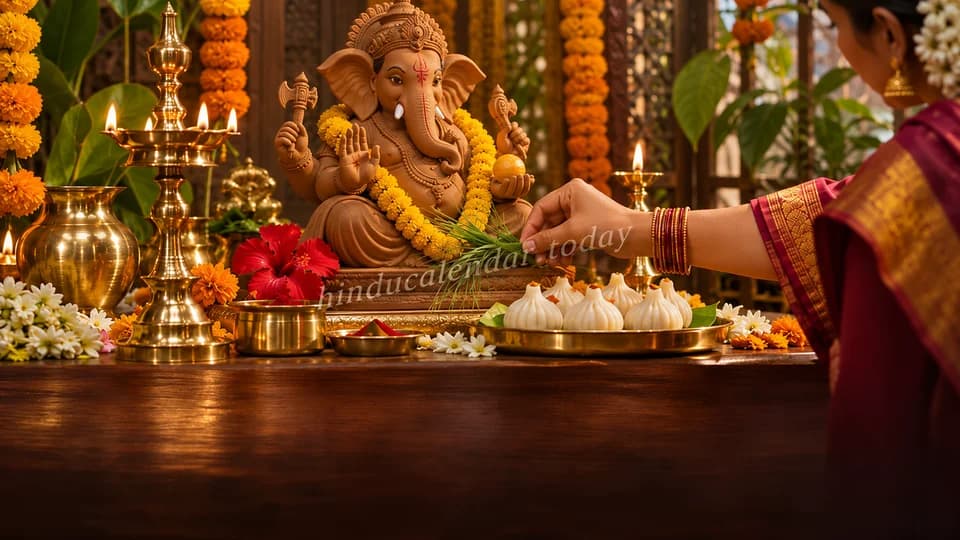
The fast is kept from sunrise to moonrise. In the evening Ganesha is worshipped with durva grass, red flowers, modak or laddoo of sesame and jaggery, and the katha of the month is read. When the Moon rises it is offered water (arghya) with sandal, rice and flowers, and only then is the fast broken.