
௧ நவம்பர் ௨௦௨௬•ஞாயிறு
மாத விரதம்•ஸ்ரீ கிருஷ்ணர் (பால கோபாலன்)

மாதாந்திர கிருஷ்ண ஜெயந்தி (மாசிக ஜன்மாஷ்டமி)

தேய்பிறை அஷ்டமி திதியில் ஸ்ரீகிருஷ்ணருக்கு அர்ப்பணிக்கப்படும் மாதாந்திர விரதம்.
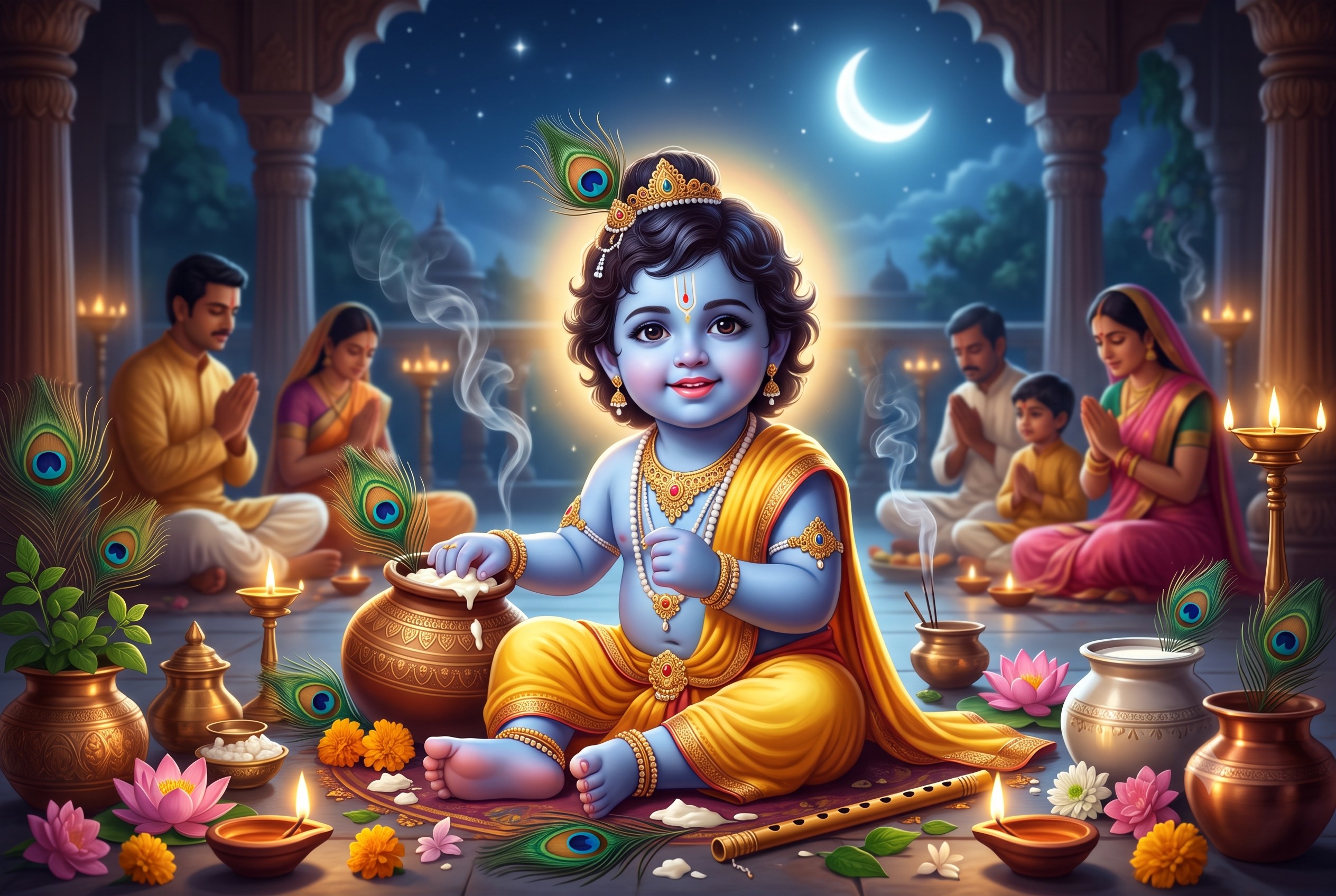
மாதாந்திர கிருஷ்ண ஜெயந்தி (மாசிக ஜன்மாஷ்டமி)

சுப முகூர்த்தம் மற்றும் பூஜை நேரம்

India•௧ நவம்பர் ௨௦௨௬

நிஷித பூஜை முகூர்த்தம்௫௧ நிமிடங்கள்
௧௧:௩௨ பிற்பகல் முதல் ௧௨:௨௨ முற்பகல், ௨ நவம்பர்

ஸ்ரீ கிருஷ்ணரின் பூஜை இரவின் 8வது முகூர்த்தத்தில் (நிஷித காலம்) செய்யப்படுகிறது.

முக்கிய பூஜை மற்றும் விரத நேரங்கள்

நிஷித காலம் (நள்ளிரவு பூஜை)சுபம்
௧௧:௩௨ பிற்பகல் முதல் ௧௨:௨௨ முற்பகல், ௨ நவம்பர்

ஸ்ரீ கிருஷ்ணர் தோன்றிய இரவின் 8வது முகூர்த்தம்

நள்ளிரவு தருணம்சுபம்
௧௧:௫௭ பிற்பகல்

வானியல் உள்ளூர் சூரிய நள்ளிரவு

ரோகிணி நட்சத்திரம்
பூசம் ௦௪:௩௦ முற்பகல், ௨ நவம்பர் வரை
அஷ்டமி திதி முடிவு
சப்தமி ௦௨:௫௨ பிற்பகல் வரை
ஜன்மாஷ்டமி பாரணை
௦௬:௧௯ முற்பகல் பிறகு

அடுத்த நாள் காலை சூரிய உதயத்திற்குப் பிறகு விரதம் முடிக்கப்படுகிறது

ஆவணி கிருஷ்ண பக்ஷ அஷ்டமி திதியில் கொண்டாடப்படுகிறது.
நிஷித காலம் என்பது உள்ளூர் சூரிய அஸ்தமனத்திலிருந்து அடுத்த சூரிய உதயம் வரையிலான இரவின் 8வது முகூர்த்தமாகும்.
🕉

முக்கியத்துவம் மற்றும் ஆன்மீக ரகசியம்

ஆன்மீக தத்துவம், உள்ளார்ந்த பொருள் மற்றும் தெய்வீக நற்பண்புகள்

ஒவ்வொரு மாதமும் தேய்பிறை அஷ்டமி திதியில் மாசிக ஜன்மாஷ்டமி அனுஷ்டிக்கப்படுகிறது. பக்தர்கள் விரதமிருந்து நள்ளிரவில் பால கோபாலனை வழிபடுகின்றனர்.

கிருஷ்ண பக்தி, மன அமைதி மற்றும் இல்லத்தில் மங்களம்.

📜

புராண கதை மற்றும் வரலாறு

புனித நூல்களில் விவரிக்கப்பட்டுள்ள தெய்வீக வரலாறு

கதை சுருக்கம் (முக்கிய நிகழ்வு)

"Born in a dark Mathura prison where his parents Devaki and Vasudeva were captive under tyrant King Kansa, infant Krishna was miraculously carried across the roaring Yamuna to Gokul by Vasudeva, sheltered from torrential rains by the multi-hooded serpent Sheshanaga, ensuring his safe upbringing in the loving home of Yashoda and Nanda Baba."

During the Dwapara Yuga, the Bhoja king Kansa usurped the throne of Mathura, imprisoning his righteous father Ugrasena and unleashing reign of terror. On the wedding day of his beloved sister Devaki to nobleman Vasudeva, a thunderous celestial voice (Akashvani) echoed from the heavens: "O foolish Kansa! The eighth son of this sister shall be your slayer!" Consumed by mortal fear, Kansa threw Devaki and Vasudeva into high-security dungeons, chaining them in iron shackles. Over the years, Kansa mercilessly slaughtered their first six newborn infants upon birth. The seventh divine child, Sheshanaga (Balarama), was mystically transferred by Yogamaya to the womb of Rohini in Gokul. When Devaki conceived her eighth child, divine radiance illuminated the prison cell. On the stormy midnight of Bhadrapada Krishna Ashtami, under the auspicious Rohini Nakshatra, the Supreme Lord Vishnu appeared before Devaki and Vasudeva in His majestic four-armed form, holding the Shankha, Chakra, Gada, and Padma. He instructed Vasudeva to carry Him in an infant form across the flooded Yamuna River to Gokul, exchange Him with the newborn daughter (Yogamaya) of Yashoda and Nanda Maharaja, and return before dawn. Instantly, the heavy iron chains unlocked, the thick iron prison doors swung open, and the guards fell into deep slumber. Vasudeva placed the radiant infant Krishna in a wicker basket on his head and stepped into the pitch-black night. As he entered the tempestuous, roaring Yamuna River, the waters parted to yield safe passage, while the celestial serpent Sheshanaga spread his five hoods above the child to shield Him from the torrential downpour. Reaching Gokul unnoticed while the villagers slept, Vasudeva lovingly placed Krishna beside mother Yashoda and returned to Mathura with the infant baby girl. When Kansa rushed to the cell to kill the child, the baby girl slipped from his hands, transformed into the eight-armed Goddess Durga, and proclaimed: "O foolish tyrant! Your slayer has already been born and is growing safely elsewhere!" Lord Krishna grew up in the pastoral paradise of Gokul and Vrindavan, enchanting all with His divine childhood pastimes (Lilas) before vanquishing Kansa and restoring Dharma.
॥ इति शुभम् ॥•Sanatana Sacred Lore Archive
ॐ तत् सत्

முக்கிய சடங்குகள் மற்றும் வழிபாடுகள்

படிப்படியான பூஜை முறைகள் மற்றும் விரத ஆசாரங்கள்

௧

நாள் முழுவதும் விரதம் இருத்தல்

௨

நள்ளிரவில் பால கோபாலருக்கு பஞ்சாமிர்த அபிஷேகம்

௩

வெண்ணெய், கற்கண்டு மற்றும் துளசி நிவேதனம்

௪

கிருஷ்ண மந்திர பாராயணம்

🕉

முக்கிய தெய்வம் மற்றும் புனித மந்திரங்கள்

ஸ்ரீ கிருஷ்ணர் (பால கோபாலன்) • அமைதி மற்றும் ஆசிகளுக்கான வேத மற்றும் புராண மந்திரங்கள்

௧

Maha-Mantra (महामंत्र)

हरे कृष्ण हरे कृष्ण कृष्ण कृष्ण हरे हरे । हरे राम हरे राम राम राम हरे हरे ॥

Hare Krishna Hare Krishna Krishna Krishna Hare Hare, Hare Rama Hare Rama Rama Rama Hare Hare

பொருள்: O Supreme Lord Krishna, O Divine Energy of God (Hara/Radha), please engage me in Your transcendental loving devotional service.
௨

Shri Krishna Mool Mantra (मूल मंत्र)

ॐ नमो भगवते वासुदेवाय ॥

Om Namo Bhagavate Vasudevaya

பொருள்: I offer my humble prostrations unto Bhagavan Vasudeva, the Supreme Lord who dwells within all living beings.
௩

Krishna Janma Shloka (जन्माष्टमी स्तुति)

वसुदेवसुतं देवं कंसचाणूरमर्दनम् । देवकीपरमानन्दं कृष्णं वन्दे जगद्गुरुम् ॥

Vasudeva-Sutam Devam Kamsa-Chanura-Mardanam, Devaki-Parama-Anandam Krishnam Vande Jagadgurum

பொருள்: I bow to Lord Krishna, the divine son of Vasudeva, the slayer of demons Kamsa and Chanura, the supreme joy of Mother Devaki, and the spiritual master of the universe.
௪

Kasturi Tilakam (श्रीकृष्ण ध्यान श्लोक)

कस्तूरीतिलकं ललाटपटले वक्षःस्थले कौस्तुभं नासाग्रे नवमौक्तिकं करतले वेणुं करे कङ्कणम् । सर्वाङ्गे हरिचन्दनं सुललितं कण्ठे च मुक्तावलिः गोपस्त्रीपरिवेष्टितो विजयते गोपालचूडामणिः ॥

Kasturi Tilakam Lalata Patale Vakshah-Sthale Kaustubham, Nasagre Nava-Mauktikam Karatale Venum Kare Kankanam

பொருள்: With musk tilaka adorning His forehead, the Kaustubha gem sparkling on His chest, a pearl ring on His nose, flute in His hand, golden bracelet on His wrist, sacred sandalwood smeared over His body, pearl necklace on His neck, surrounded by gopis—all glories to the crest-jewel of cowherds, Lord Gopala!
௫

Bhagavad Gita Dharma Shloka (गीता सार श्लोक)

यदा यदा हि धर्मस्य ग्लानिर्भवति भारत । अभ्युत्थानमधर्मस्य तदात्मानं सृजाम्यहम् ॥ परित्राणाय साधूनां विनाशाय च दुष्कृताम् । धर्मसंस्थापनार्थाय सम्भवामि युगे युगे ॥

Yada Yada Hi Dharmasya Glanir Bhavati Bharata, Abhyutthanam Adharmasya Tadatmanam Srijamyaham; Paritranaya Sadhunam Vinashaya Cha Dushkritam, Dharma-Samsthapanarthaya Sambhavami Yuge Yuge

பொருள்: Whenever and wherever there is a decline in religious practice, O descendant of Bharata, and a predominant rise of irreligion—at that time I descend Myself. To deliver the pious and to annihilate the miscreants, as well as to re-establish the principles of religion, I advent Myself millennium after millennium.
ஆர்த்தி மற்றும் துதி
आरती कुंजबिहारी की, श्री गिरिधर कृष्ण मुरारी की ॥ गले में बैजंती माला, बजावै मुरली मधुर बाला । श्रवण में कुण्डल झलकाला, नंद के आनंद नंदलाला । गगन सम अंग कांति काली, राधिका चमक रही आली । लतन में ठाढ़े बनमाली, भ्रमर सी अलक, कस्तूरी तिलक, चंद्र सी झलक, ललित छवि श्यामा प्यारी की ॥ श्री गिरिधर कृष्ण मुरारी की, आरती कुंजबिहारी की ॥ कनकमय मोर मुकुट बिलसै, देवता दरसन को तरसैं । गगन सों सुमन रासि बरसै, बजे मुरचंग, मधुर मृदंग, ग्वालिन संग, अतुल रति गोप कुमारी की ॥ श्री गिरिधर कृष्ण मुरारी की, आरती कुंजबिहारी की ॥

பல்வேறு பகுதிகளில் பாரம்பரிய கொண்டாட்டங்கள்

பாரதம் மற்றும் உலகம் முழுவதும் கொண்டாடப்படும் தனித்துவமான பாரம்பரியங்கள்

Braj Region (Mathura & Vrindavan, Uttar Pradesh)Janmotsav & Raslila

Pilgrims from across the world gather at Krishna Janmasthan Temple in Mathura and Banke Bihari Temple in Vrindavan. The entire region resounds with Raslila dance-dramas, midnight Panchamrit Mahabhisheka with silver conches, and 24-hour Akhand Kirtan.

Maharashtra (Mumbai, Pune, Thane)Dahi Handi (Gopalkala)

On the day following Janmashtami (Nandotsav), spirited youth groups (Govindas) construct towering multi-tier human pyramids to reach and shatter clay pots (Handis) filled with curd, butter, and fruits suspended high above city streets, reenacting young Krishna's butter-stealing pastimes.

Gujarat (Dwarka & Nathdwara)Makhan Handi & Garba

At the grand Dwarkadhish Temple and Nathdwara Shrinathji temple, thousands gather for gold and diamond Shringara darshan, playing traditional Garba and Raas folk dances into the early morning hours.

South India (Tamil Nadu, Andhra Pradesh, Karnataka, Kerala)Gokulashtami & Kolam Footprints

Families draw delicate rice-flour footprints of baby Krishna leading from the home entrance into the puja room. Special traditional savories and sweets like Seedai, Murukku, Thattai, and Aval (puffed rice with jaggery) are offered with fresh butter.

Eastern India (Manipur, Assam, Bengal & Odisha)Sattriya, Borgeet & Manipuri Raas

In Assam, community prayer halls (Namghars) echo with Sankardeva's devotional Borgeet and Ankia Naat. In Manipur, classical Manipuri Raas Leela is performed in exquisite traditional costumes portraying Radha-Krishna devotion.

International (Nepal, Mauritius, Fiji, USA, UK, ISKCON Centers)Global Midnight Vigil & 108 Abhishek

Observed as a national holiday in Nepal with thousands visiting the ancient Patan Krishna Temple. Millions attend ISKCON temples across London, New York, Durban, and Sydney for midnight Abhishek and Chappan Bhog distribution.

பாரம்பரிய நைவேத்தியம் மற்றும் பிரசாதம்

பக்தியுடன் சமைத்து சமர்ப்பிக்கப்படும் புனித பிரசாதங்கள்

🍯Makhan-Mishri (Freshly churned white butter with crystallized sugar)
🍯Dhaniya Panjiri (Spiced coriander and roasted makhana prasad)
🍯Panchamrit / Charanamrit (Constituted of raw milk, curd, honey, sugar, and ghee)
🍯Chappan Bhog (56 traditional sweets, savories, and seasonal fruits)
🍯Gopalkala (Flattened rice mixed with curd, cucumber, pomegranate, and green chilies)
🍯Seedai, Thattai and Murukku (Traditional South Indian crispy delicacies)
🍯Makhana Kheer and Kuttu/Singhara Halwa

புனித வேத மற்றும் புராண ஆதாரங்கள்

✦Shrimad Bhagavata Purana — Skandha 10 (Adhyaya 1 to 4: The Birth and Pastimes of Krishna)
✦Vishnu Purana — Book 5 (Krishna Charitra)
✦Harivamsa Purana — Vishnu Parva
✦Mahabharata — Sabha Parva & Shanti Parva
✦Shrimad Bhagavad Gita — Chapter 4 (Jnana Karma Sanyasa Yoga)
✦Padma Purana — Uttara Khanda (Janmashtami Vrata Mahatmya)

விரத விதிகளும் பாரணை வழிமுறைகளும்

✔Sankalpa: Taken on Saptami evening and reaffirmed on Ashtami morning at sunrise.
✔Fasting Window: Complete fast throughout the daytime and evening hours.
✔Permissible Diet (Phalahar): Water, milk, fresh fruits, sabudana, makhana, sendha namak (rock salt), and kuttu/singhara flour for those unable to do waterless fasting.
✔Prohibited Items: Grains, pulses, rice, wheat, onion, garlic, and non-vegetarian food.
✔Parana (Breaking Fast): Performed the following morning after sunrise after Rohini Nakshatra and Ashtami tithi conclude, or after midnight Janmotsav Aarti.

மாதாந்திர கிருஷ்ண ஜெயந்தி (மாசிக ஜன்மாஷ்டமி) — ௨௦௨௬

வருடாந்திர திதிகள் மற்றும் பஞ்சாங்கம் (௧௨)