The being of sin
The Padma Purana tells that when Vishnu created the world, he also created a being made of sin, the Papa Purusha, to punish the wicked. Its head was the killing of a Brahmin, its arms the killing of cows, its eyes theft, its belly drunkenness, its feet the dishonouring of a teacher, and every other sin made a part of its body. Then Vishnu made Yama to judge souls, and saw the great suffering of beings in Yama's hells.
Moved with pity, Vishnu took the form of Ekadashi, and whoever fasted on it was freed from sin and the hells began to empty. The Papa Purusha, afraid that it would be destroyed, came to Vishnu and begged for a place to hide on the Ekadashi. Vishnu told it to take refuge in grain. Since then, on Ekadashi, sin dwells in rice, wheat, pulses and every grain, and one who eats them takes in sin; one who fasts is untouched by it.
Its greatness
The texts say that there is no vrat equal to Ekadashi, as there is no river like the Ganga and no teacher like the mother. Its fast is said to give the merit of a thousand horse sacrifices, of bathing at every holy place and of giving away the earth. It frees not only the one who keeps it but his ancestors, and at death Vishnu's messengers, not Yama's, come for him.
Even keeping it without knowing, as the hunter and the outcast prince of the kathas did, is said to bear fruit. Hearing or reading its katha gives a share of its merit.
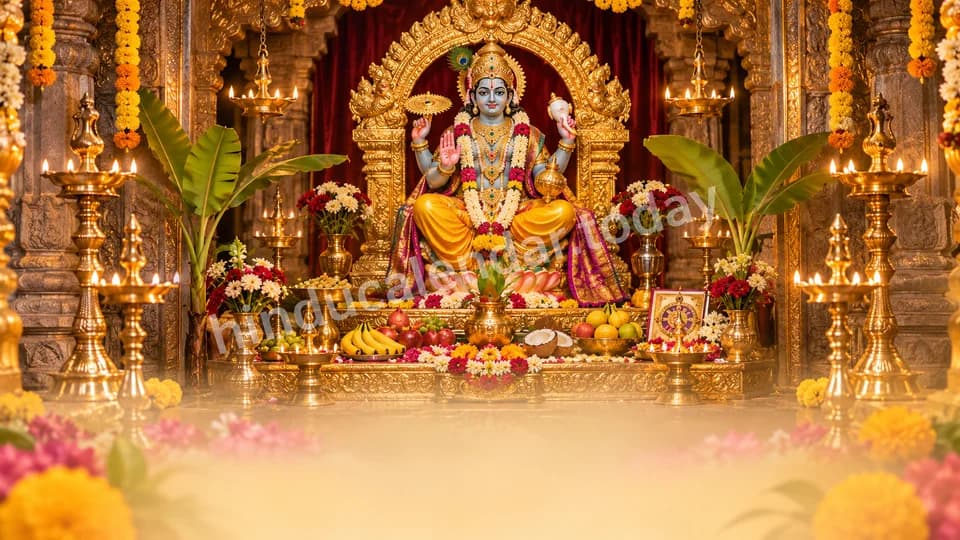
Above all, the Ekadashi is a day for remembering Vishnu: the fast quiets the body, so that the mind can turn to him in worship, song and the night's vigil.